Pali Ballaleshwar
Pali’s Ballaleshwar is an Ashtavinayak kshetra (sacred site) set amid the Sahyadri hills and forests, near the Sarasgad fort and the Amba river (Tal. Sudhagad, Dist. Raigad). It is the only Ganpati in the Ashtavinayak named after a devotee — the boy Ballal — which is why it is called ‘Ballaleshwar.’ As per the legend, pleased with the child devotee Ballal’s bhakti, Ganesh gave a boon that he would take his devotee’s name before his own. A special custom here is to take darshan of Dhundi Vinayak first, before the main deity. The original wooden temple is believed to have been converted to stone in the time of Nana Phadnis (around 1760); this is one of Raigad district’s two Ashtavinayak kshetras (the other being Mahad).
This year's dates (2026)
- Shri Ganesh Chaturthi — Ganeshotsav begins (madhyanha chaturthi)14 Sep
- Anant Chaturdashi — Ganeshotsav ends / visarjan25 Sep
- Shri Ganesh Jayanti, Vinayak Chaturthi (Maghi Ganesh Jayanti)22 Jan
- Angarki Sankashti Chaturthi (moonrise 9.20 pm)6 Jan
- Angarki Sankashti Chaturthi (moonrise 10.19 pm)5 May
- Angarki Sankashti Chaturthi (moonrise 8.13 pm)29 Sep
Deity & significance
The Ganesh here is worshipped as Ballaleshwar — the Vinayak known by the name of his devotee, Ballal. Across the Ashtavinayak, the Ganpati at eight places is known by eight different names; of these, only the Pali Ganpati is famous by a devotee’s name (Ballal) — and that is this kshetra’s central distinction. The deity is held to be navsala pavnara (one who fulfils vows).
“Navsala pavnara” (wish-fulfilling) is a statement of folk faith — take it in the sense of “it is believed,” not as a universal rule.
Dhundi Vinayak — the key distinction.
The stone that Ballal worshipped as Ganesh, and which his father threw away, is revered as Shri Dhundi Vinayak; by tradition devotees take darshan of Dhundi Vinayak first, and only then of Ballaleshwar. (This is a custom tied to the katha — take it in the sense of “as is observed.”)
Place in the Ashtavinayak.
The pilgrimage to Maharashtra’s eight major Ganesh kshetras is called the Ashtavinayak; Pali is one of them and one of the two that lie in Raigad district (with Mahad). Sources differ on its number in the circuit — by the Ganesh Purana and the traditional yatra order, Pali is generally reckoned the “third” (Morgaon → Siddhatek → Pali → Mahad), while the Marathi Vishwakosh (encyclopaedia) calls it the “eighth” Ganpati. Since the order shifts with the classification tradition, it is fairer not to fix a single number but to present it as “a major Ashtavinayak kshetra (generally reckoned the third in the yatra order).”
The full Ashtavinayak yatra guide and the details of the other kshetras are on a separate page; the scriptural (yatra) order is given at the end of this page. Pali’s Raigad companion Ashtavinayak, Mahad Varadvinayak, and the Mumbai-route neighbours Lenyadri Girijatmaj and Ozar Vighneshwar are easily added to a Pali yatra.
History & legend
Construction history.
Sources differ slightly on the details of the present stone temple. The consistent core is this — there was an original wooden temple, and in the time of Nana Phadnis (Phadnavis), around 1760, it was converted into a stone temple. By some accounts the original wooden temple was built by Moreshwar Vitthal Sindkar in 1640, with the Phadnis-designed stone temple following in 1760; the Marathi Wikipedia says only that “Nana Phadnis converted the wooden temple to stone” (without a year); while a Khopoli record puts it at 1760, in the Hemadpanthi and Konkani styles, with the original core reckoned to be from the 11th century. Because the exact name of the original builder and the year differ across sources, take them not as fixed but as “around 1760, a stone conversion on Nana Phadnis’s initiative.”
The temple bell is recorded as having been brought and gifted by Chimaji Appa (after the victory at Vasai, taken from the Portuguese) — as with some other Ashtavinayak bells; since this note comes from a single source-cluster, take it in the sense of “it is recorded.”
The Ballal sthala-purana (site legend).
In the Treta yuga, at Pallipur (present-day Pali), lived a merchant named Kalyan (Kalyansheth) and his wife Indumati, whose son was Ballal. From childhood Ballal was a devoted bhakta of Ganesh. He would take his friends into the forest and there, worshipping a stone as Ganesh, do puja and bhajan.
Gradually Ballal became absorbed in the puja, neglecting his studies, and the other children too began coming home late. At this Kalyan grew furious. In his anger he went into the forest, destroyed Ballal’s place of worship, threw away the stone he worshipped, and beat Ballal and tied him to a tree — leaving with the taunt, “let your Ganesh himself come and free you now.”
Even bound, Ballal kept repeating Ganesh’s name. Pleased by his bhakti, Ganesh appeared there (in some versions in the form of a Brahmin/sadhu), freed Ballal, healed his wounds and granted a boon — with the promise that this place would be famous by the name “Ballal Vinayak,” that is, the deity would take his devotee’s name before his own. This is how the kshetra came to be called “Ballaleshwar.”
The very stone that Kalyan had thrown away in anger came to be worshipped as Shri Dhundi Vinayak; and that is how the custom arose of taking Dhundi Vinayak’s darshan before Ballaleshwar’s.
There are minor differences across the versions — whether Ganesh appeared in his own form or as a Brahmin/sadhu, and the exact detail of the boon — these vary by version. The official trust katha ties this story to the Pallipur references in the Ganesh Purana and the Mudgala Purana; however, that original Purana text remains to be verified. Verify the authoritative Marathi version with the temple trust or a standard text.
Architecture
- Facing & style: The temple faces east. By some accounts its plan is in the shape of the letter “Shri,” and the black-stone construction is in the Hemadpanthi and Konkani styles.
- The sun-ray feature: Because of the east-facing design, the sun’s rays at sunrise are said to fall directly on the murti. Some sources say only that “as the sun rises its rays fall on the body of the murti” (without naming a month/season), while by some accounts this happens especially in winter (December–January). This is an architectural feature (not a dated event like the Kolhapur Kiranotsav); verify the exact months with the temple trust.
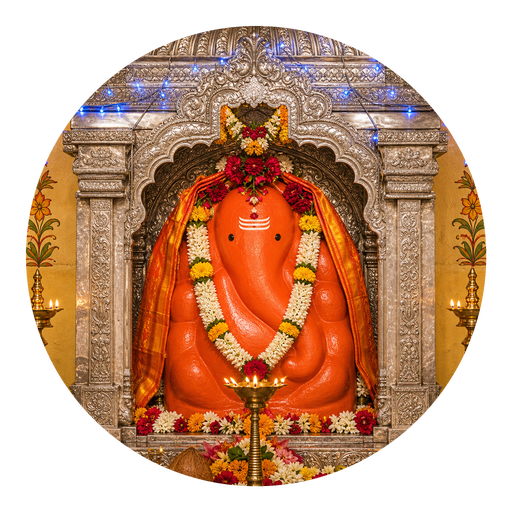
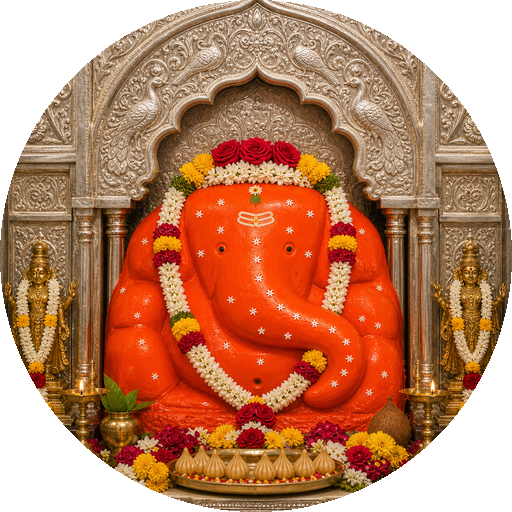
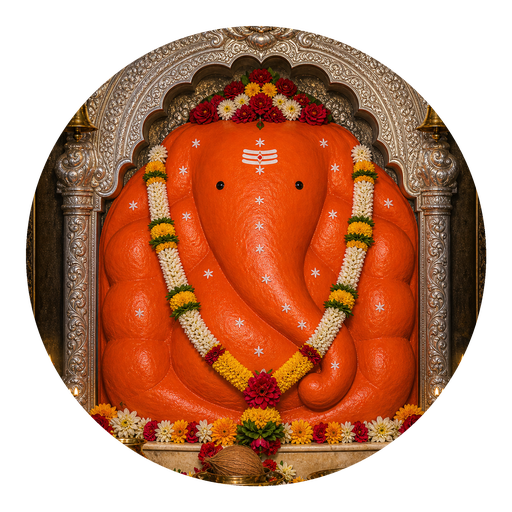
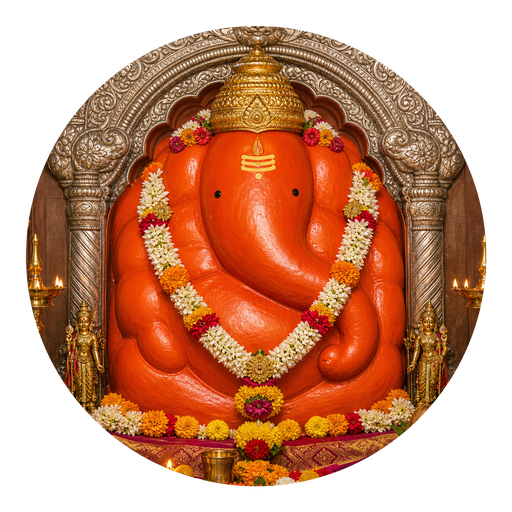
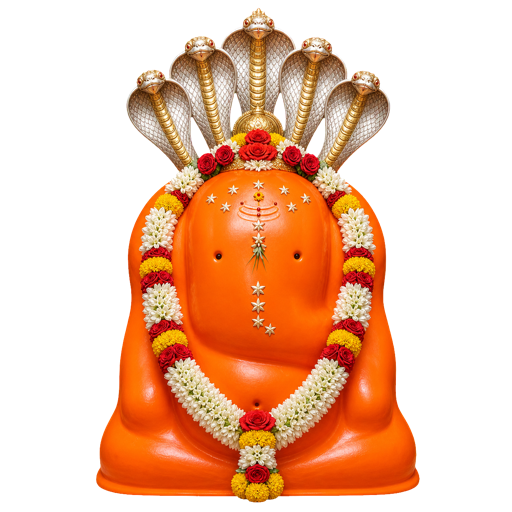
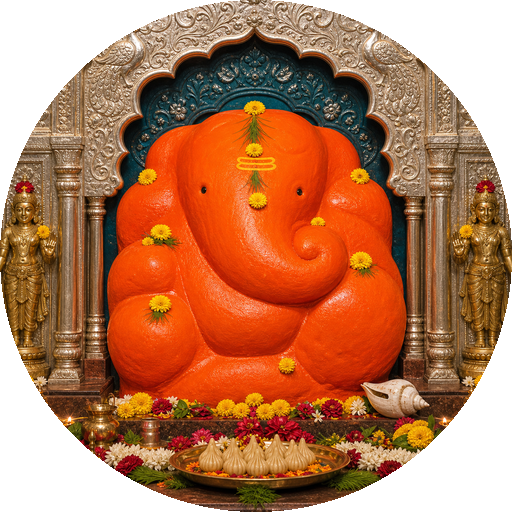
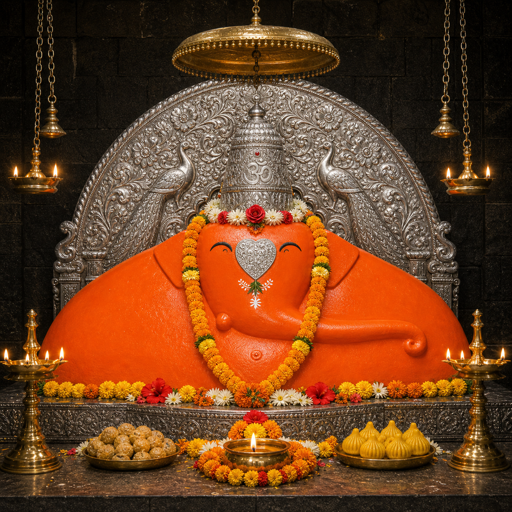
- The murti: A stone murti seated on a stone throne, facing east, with the trunk turned to the left; against a silver backdrop with Riddhi-Siddhi waving chamaras (fans); it is described as having diamonds in the eyes and the navel and a broad forehead. Since the exact measurements of the murti and the structure are limited to a single source-cluster, take them as approximate.
- Garbhagriha / sabhamandap (approximate): By some accounts the garbhagriha is about 15 feet high, the outer sanctum about 12 feet, the sabhamandap about 40 × 20 feet, with eight cypress-like pillars.
- Two lakes: there are two lakes on either side of the temple complex.
Festivals & yatra
Each festival below is fixed by tithi; each date links to that day’s panchang page. These are all general Ganesh tithis — their meaning and vidhi are covered on the respective pages. No reliable date for a Pali-specific annual yatra was found in any official source, so it is not listed here — verify the actual yatra dates with the temple trust.
| Festival / yatra | Tithi (rule) | This year’s date | Occasion |
|---|---|---|---|
| Shri Ganesh Chaturthi / Ganeshotsav | Bhadrapad Shukla Chaturthi (madhyanha) | Mon, 14 Sep 2026 — nakshatra Chitra | Ganeshotsav begins; large crowds at the kshetra |
| Anant Chaturdashi (Ganeshotsav ends / visarjan) | Bhadrapad Shukla Chaturdashi | Fri, 25 Sep 2026 — nakshatra Shatataraka | Ganeshotsav close and visarjan day |
| Maghi Ganesh Jayanti / Vinayak Chaturthi | Magh Shukla Chaturthi | Thu, 22 Jan 2026 — nakshatra Shatataraka | Maghi Ganesh Jayanti; special darshan |
| Angarki Sankashti Chaturthi | Krishna Chaturthi + Tuesday | 6 Jan · 5 May · 29 Sep 2026 | Rare and specially auspicious; large crowds |
Monthly Sankashti Chaturthi (every Krishna Chaturthi) and Vinayak Chaturthi (every Shukla Chaturthi) also carry special importance for darshan at a Ganesh kshetra like Pali. These fall every month (about twenty-four a year), so they are not all listed here — look up each month’s exact date on that day’s panchang page and on the Sankashti Chaturthi page.
Note: These dates fall differently each year because the identity is the tithi — the Gregorian date is only that year’s detail. Bhadrapad Ganeshotsav and Maghi Ganesh Jayanti draw special crowds here; the official site mentions a “Bhadrapad masotsav” and a “Magh masotsav” but does not give exact tithis — so take these as general Ganesh tithis. Their meaning and vidhi are covered on the Ganesh Chaturthi and Sankashti Chaturthi pages.
Darshan & aarti timings
By the official trust’s record, darshan hours are roughly 5:00 am to 10:30 pm — but they can change with festivals and the season, so verify them against the temple trust’s official notice before travelling.
The exact aarti times (kakad aarti / madhyanha / dhuparti / shejarti) are not given firmly here — they could not be confirmed from any official source, and they change during festivals and Sankashti. Verify the aarti timings against the temple trust’s official schedule, especially on Ganesh Chaturthi, Maghi Ganesh Jayanti and Angarki Sankashti.
Contact: the temple management’s official trust contact — ✆ 8087874195 / manager@shreeballaleshwarpali.org. An e-pass facility is recorded for differently-abled and senior (80+) devotees.
Special rituals
- Dhundi Vinayak darshan (a special custom): before the main darshan of Ballaleshwar, tradition is to take darshan of Dhundi Vinayak first — the very swayambhu stone that the merchant Kalyan threw away is revered as Dhundi Vinayak. This is a local custom — take it in the sense of “as is observed.”
- Daily puja: abhishek, puja, alankar and naivedya are the daily and festival rituals; however, their exact sequence, mantras and schedule were not found in an official source → verify them with the temple trust. For any mantra/aarti, only the meaning and the recognizable opening line are given here.
Mantra & aarti
A simple jap-mantra for Ganpati: Om Gam Ganpataye Namah — meaning: salutations to Ganpati (this is Ganesh’s bija-mantra, seed-mantra).
The best-known aarti sung at Pali and at every Ganesh temple is Samarth Ramdas’s “Sukhkarta Dukhharta.” It is sung morning and evening and at darshan. In meaning, it praises Ganpati as the giver of happiness and the remover of sorrow and obstacles, describes his beautiful shendur-adorned form, jewelled crown and anklets, and prays that he protect the devotee in every difficulty. Its recognizable opening line is “Sukhkarta Dukhharta, varta vighnachi…”.
How to reach
- Location: Pali, Tal. Sudhagad, Dist. Raigad (PIN 410205) — near the Sarasgad fort and the Amba river. About 28 km from Roha.
- By road (main): reachable from the Mumbai–Goa / Mumbai–Pune belt; about 10 km (~20 minutes) from Khopoli. Khopoli and Khalapur are the nearest major waypoints. State (ST) buses and private vehicles are available.
- Distances (approximate): Pune ~120 km, Mumbai ~110 km.
- By rail / air: the nearby railway stations and the Mumbai/Pune airports are the options.
Check a live map for the current distance, route and nearest railway station before you travel.
Nearby places
- Sarasgad fort — an old fort near the temple (a trek with views); the Amba river bank is right alongside.
- Mahad Varadvinayak — the companion Ashtavinayak in Raigad; on the Mumbai route, Pali → Mahad is easily combined.
- Lenyadri Girijatmaj and Ozar Vighneshwar — Ashtavinayak kshetras around Junnar; Mumbai-route yatra companions.
- Other local tirthas and ghats — for light tourism; check distances on a map.
Travel tips
- Fort & surroundings: if you plan to trek Sarasgad, carry enough time, water and comfortable footwear. In the monsoon the Sahyadri area gets slippery — take care.
- Crowds: Ganesh Chaturthi (14 Sep 2026), Anant Chaturdashi (25 Sep 2026), Maghi Ganesh Jayanti (22 Jan 2026) and Angarki Sankashti draw large crowds — plan ahead; take special care of elders and small children.
- Dhundi Vinayak first: by tradition, take darshan of Dhundi Vinayak first and then of Ballaleshwar.
- Timings change: darshan hours (the trust’s record of 5:00 am–10:30 pm) and special darshan change as per the temple trust’s official notice — verify before travelling. Follow photography rules too.
Ashtavinayak — scriptural (yatra) order
The scriptural (shastrokta) order of the eight Ashtavinayak kshetras is generally taken to be as below, with Ballaleshwar (Pali) third:
- Morgaon — Mayureshwar · Tal. Baramati, Dist. Pune
- Siddhatek — Siddhivinayak · Tal. Karjat, Dist. Ahmednagar
- Pali — Ballaleshwar (this page) · Dist. Raigad
- Mahad — Varadvinayak · Dist. Raigad
- Theur — Chintamani · Dist. Pune
- Lenyadri — Girijatmaj · Dist. Pune
- Ozar — Vighneshwar · Dist. Pune
- Ranjangaon — Mahaganpati · Dist. Pune
Note: the number varies by classification tradition — which is why some sources (for example the Marathi Vishwakosh) give Pali a different number (eighth); the order above follows the Ganesh Purana and the traditional yatra order. (See the ashtavinayak-ordinal note above.)
Good to know
- Pali’s Ballaleshwar is the only Ashtavinayak Ganpati named after a devotee (Ballal); one of Raigad district’s two kshetras (with Mahad).
- The order (third vs eighth) and the construction year differ across sources — do not treat any single version as final.
- Darshan/aarti timings, yatra dates and the aarti schedule should be verified with the temple trust before you plan travel.
- Avoid mixing up the dates: Bhadrapad Ganesh Chaturthi (Sep) ≠ Anant Chaturdashi (visarjan) ≠ Maghi Ganesh Jayanti (Jan, Magh Shukla Chaturthi) ≠ the monthly Sankashti/Vinayak Chaturthi.
- Do not use copyright temple photos/logos on the page, and make no “official association” claim.
FAQ
- Where is the Ballaleshwar Pali temple?
- In Pali village, Tal. Sudhagad, Dist. Raigad (PIN 410205) — near the Sarasgad fort and the Amba river, an Ashtavinayak kshetra set amid the Sahyadri hills and forests.
- Which is the Ashtavinayak Ganpati named after a devotee?
- Pali’s Ballaleshwar — the only Ganpati in the Ashtavinayak known by a devotee’s name (Ballal).
- What is the Ballaleshwar katha? Who was Ballal?
- Ballal, the son of the merchant Kalyan and Indumati of Pallipur (Pali), was a devoted child bhakta of Ganesh. Pleased by his bhakti, Ganesh granted a boon and promised that this place would be famous by the devotee’s name — “Ballal Vinayak.” There are minor differences across the versions.
- What is Dhundi Vinayak, and why is its darshan taken first?
- The stone that Ballal worshipped as Ganesh, and which his father threw away, is revered as Dhundi Vinayak. By tradition, darshan of Dhundi Vinayak is taken before that of Ballaleshwar.
- Who built the Ballaleshwar temple?
- The original wooden temple is believed to have been converted to stone in the time of Nana Phadnis (around 1760); some sources credit the original construction to Moreshwar Vitthal Sindkar (1640). The exact year and builder differ across sources.
- What number is Pali in the Ashtavinayak?
- By the Ganesh Purana and the traditional yatra order, generally the third (Morgaon → Siddhatek → Pali → Mahad); the Marathi Vishwakosh, however, calls it the “eighth.” The order varies by tradition.
- How far is Pali from Mumbai/Pune, and how do you reach it?
- By some accounts Mumbai is ~110 km and Pune ~120 km; Khopoli is ~10 km away. You can reach it by ST bus and private vehicle. Check the exact distance on a map.
- What are the Ballaleshwar temple darshan timings?
- By the official trust’s record, roughly 5:00 am to 10:30 pm — but this can change with festivals/season, so verify with the temple trust.