Pavitra Ekadashi
Pavitra Ekadashi is an alternate name for Putrada Ekadashi (Shravan) — both names refer to the same tithi (Shravan Shukla Ekadashi), not a separate occasion. In 2026, the Smarta fast falls on Sunday, 23 August, and the Bhagavata fast on Monday, 24 August. The name "Pavitra" literally means "pure" in Sanskrit; in some Vaishnav traditions, it's also connected to the Pavitraropana ritual, in which a pavitra (a sacred thread) is offered to the deity.
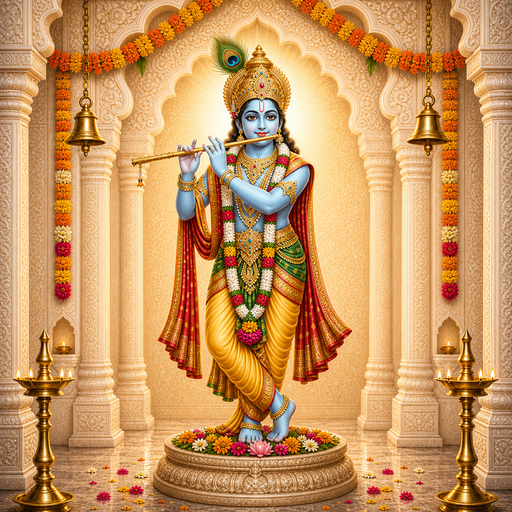
This year's dates (2026)
- Sunday — the panchang's primary label is 'Putrada Smarta Ekadashi' (the fasting day for the Smarta/householder tradition); 'Pavitra' isn't a panchang label23 Aug
- Monday — the panchang's primary label is 'Putrada Bhagavata Ekadashi' (the fasting day for the Bhagavata/Vaishnav tradition, due to a Dwadashi extension)24 Aug
⚠️ Why this page exists separately: the katha, main puja vidhi, fasting rules, and the Smarta-versus-Bhagavata distinction are covered in detail on the Putrada Ekadashi page. This page covers the name "Pavitra" and the Pavitraropana ritual in more detail — this isn't a separate vrat or a separate festival, it's two names for the same tithi.
Deity and significance
The core significance of this tithi (the wish for children, Vishnu's grace, the story of King Mahijit) is shared with Putrada Ekadashi — the detail is on the Putrada Ekadashi page.
Two distinct explanations for the name "Pavitra" turn up — both about the same occasion, not in conflict, just at different levels of depth:
- General and simple: the Sanskrit word "pavitra" means pure. There's a general belief that observing this Ekadashi's fast with devotion purifies the soul, or frees it from sin. Some Vaishnav websites give only this meaning, without mentioning the thread ritual.
- Sect-specific and detailed: in some Vaishnav traditions, on this day or a nearby tithi, a specific puja ritual called Pavitraropana is performed — offering a pavitra (a knotted sacred thread) to the deity's idol, believed to "correct" any lapses or mistakes in worship over the past year.
The second layer (the Pavitraropana ritual) is a temple- and sect-centred practice — found in the Gujarat-based Pushtimarg tradition, the Karnataka-based Madhva tradition, and general agama-temple tradition; no independent confirmation was found that it's a Maharashtrian household practice.
The vrat katha
The main puranic story (King Mahijit, the sage Lomash, the episode of a cow from a past life) is given in detail on the Putrada Ekadashi page.
The Pushtimarg tradition connects this Ekadashi to a different, sect-founding story — the belief that Shri Mahaprabhuji (Vallabhacharya) received permission from Shri Gokulchandramaji (a form of Krishna) at Gokul, on this very day, to initiate devotees into brahmasambandha — making this the most important Ekadashi in the Pushtimarg tradition. This is an entirely separate, independent story from the puranic tale of King Mahijit — it isn't the same event told two ways; these are two different stories from two different traditions that have both come to be connected with the same tithi.
Who should observe it
The general Ekadashi vrat (fasting, with the wish for children) is the same as Putrada Ekadashi — any Vishnu devotee can observe it. The Pavitraropana-specific ritual, however, is mainly performed by temple priests and followers of specific Vaishnav traditions (Pushtimarg, Madhva, Gaudiya) — no confirmation was found that this is a household or universal practice.
The Pavitraropana ritual
The main fasting-vidhi (the morning bath and resolve, worship of Vishnu, tulsi, the night vigil, and breaking the fast on Dwadashi) is given in detail on the Putrada Ekadashi page. Only the Pavitraropana-specific detail is given here:
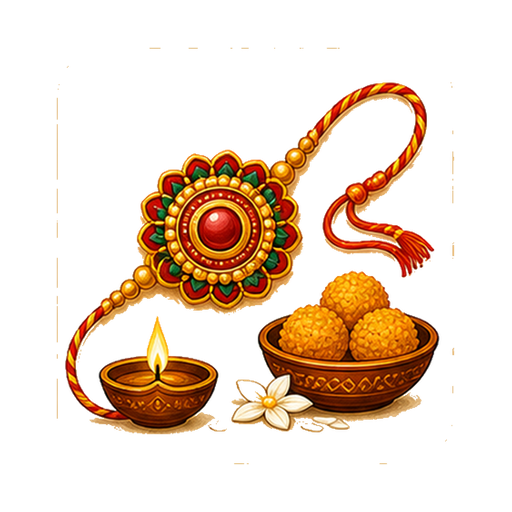
- Preparing the pavitra: a knotted thread — the material and number of knots vary by tradition. Under general agama rules, any one of gold, silver, copper, silk, kusha grass, or cotton can be used, with anywhere from eight to a hundred knots; the Pushtimarg tradition specifies exactly 108 knots or 360 cotton strands; the Madhva tradition specifies twelve, twenty-four, or thirty-six knots.
- Offering: the pavitra is offered to, or draped on, the deity's idol (Vishnu, Krishna, or a Shaligram) — an abhishek with panchamrit (milk, curd, ghee, honey, and sugar) is also performed.
- Purpose: believed to "correct" any unintentional lapses or mistakes in worship over the past year, and to preserve the deity's purity.
All three of these steps are temple or sect rituals, not part of the household Ekadashi fasting vidhi — the two shouldn't be confused. There's no single "correct" number of knots or material — it varies by tradition. If you wish to perform Pavitraropana, do so only under the guidance of your tradition's guru, not as a household experiment.
Puja materials
The materials list given on the Putrada Ekadashi page (a Vishnu idol, a low wooden seat, tulsi, naivedya, and so on) applies here too. If performing Pavitraropana, additional materials are needed — a pavitra thread (cotton, silk, or another material per your tradition's rule, knotted) and panchamrit.
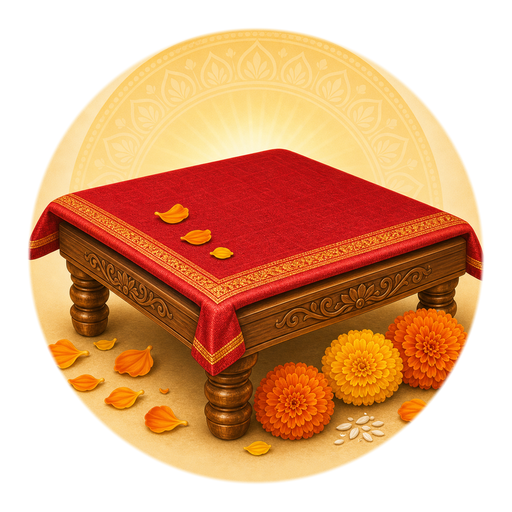 Low wooden seat (chaurang)
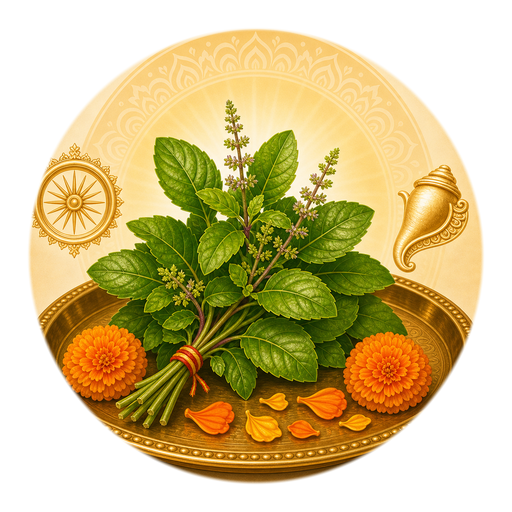 Tulsi
Tulsi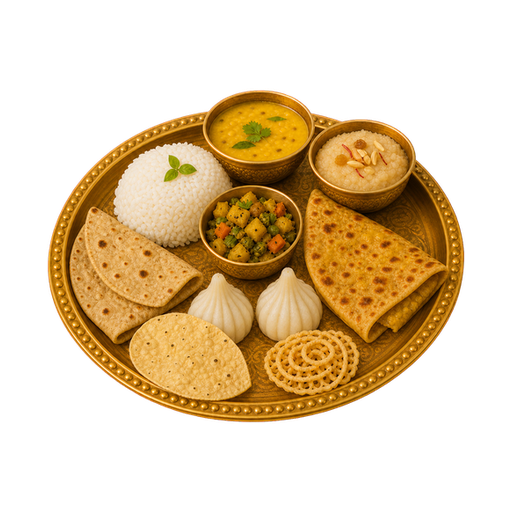 Naivedya
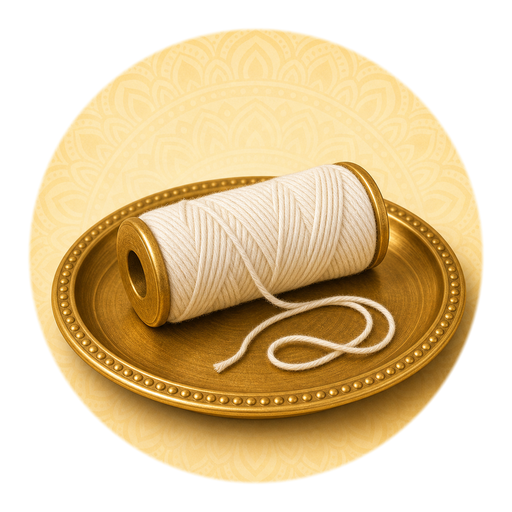 Pavitra thread (cotton)
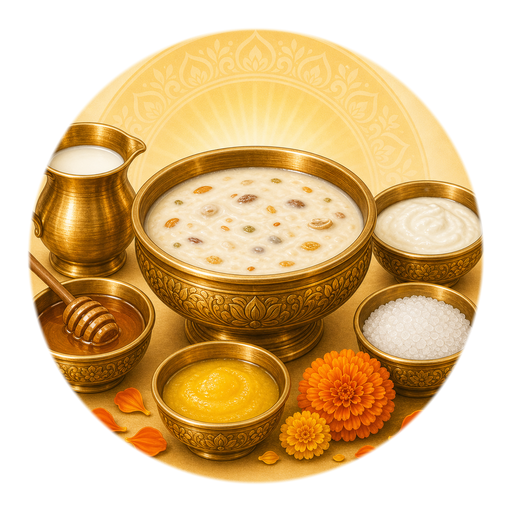 Panchamrit
Fasting and dietary rules
The same as Putrada Ekadashi — grains, lentils, onions, and meat are avoided; fruit, milk, and water are allowed; a waterless or fruit-only fast can be chosen according to tradition. Couples hoping for a child, or who are expecting, should take expert advice when deciding how strict a fast to keep.
Mantra
The same as Putrada Ekadashi. The twelve-syllable mantra "Om Namo Bhagavate Vasudevaya," a well-known mantra in Vishnu worship, is also found connected to this Ekadashi.
Regional customs
This panchang's primary label for this tithi is "Putrada Ekadashi," and the Marathi-language sources checked did not turn up a dedicated "Pavitra Ekadashi" source.
The name "Pavitra" or "Pavitropana" mainly turns up in two places — as a synonymous title for "Putrada" in Hindi-language devotional media (with the same story and benefit), and, with the Pavitraropana ritual attached, in specific Vaishnav traditions (Pushtimarg in Gujarat/Rajasthan, Madhva in Karnataka, and Gaudiya/ISKCON) — these traditions are a minority in Maharashtra. So "Pavitra" is an alternate, pan-Indian name for Shravan Putrada Ekadashi, connected to the Pavitraropana ritual within specific Vaishnav traditions — not a Maharashtrian household practice.
2026 dates
| Date | Day | The panchang's primary label |
|---|---|---|
| 23 August | Sunday | Putrada Smarta Ekadashi (the Smarta/householder tradition) |
| 24 August | Monday | Putrada Bhagavata Ekadashi (the Bhagavata/Vaishnav tradition, due to a Dwadashi extension) |
The tithi itself, Shravan Shukla Ekadashi, stays fixed; the exact date in future years will vary according to that year's panchang.
Good to know
- Those following the Smarta tradition should observe the fast on Sunday, 23 August; those following the Bhagavata tradition on Monday, 24 August — which tradition applies depends on locality and family custom.
- "Pavitra" and "Putrada" are two names for the same tithi — keep in mind that these aren't two different dates or two different vrats.
- If you wish to perform the Pavitraropana ritual, do so only under the guidance of your tradition's guru.
FAQ
- Are Pavitra Ekadashi and Putrada Ekadashi the same?
- Yes. Both are names for the same tithi, Shravan Shukla Ekadashi — not a separate occasion.
- When does Pavitra Ekadashi fall in 2026?
- Sunday, 23 August for the Smarta tradition; Monday, 24 August 2026 for the Bhagavata tradition.
- Why is it called "Pavitra"?
- The Sanskrit word "pavitra" means pure. In some traditions, this is connected to the soul-purification that comes from fasting; in some Vaishnav traditions, it's connected to the Pavitraropana ritual, in which a "pavitra" (a sacred thread) is offered to the deity.
- What is Pavitraropana (offering a pavitra)?
- The ritual of offering a knotted sacred thread to the deity's idol — believed to correct lapses in worship over the past year. It's mainly a temple or specific Vaishnav-tradition practice.
- Is Pavitra Ekadashi observed in Maharashtra?
- In Maharashtra, this tithi is mainly observed under the name "Putrada Ekadashi." The name "Pavitra" and the Pavitraropana ritual are found mainly in other Vaishnav traditions or regions.
- What is the vrat katha of Pavitra Ekadashi?
- The main puranic story (King Mahijit) is the same as Putrada Ekadashi — the full story is on the Putrada Ekadashi page.