Tuljapur — Tuljabhavani
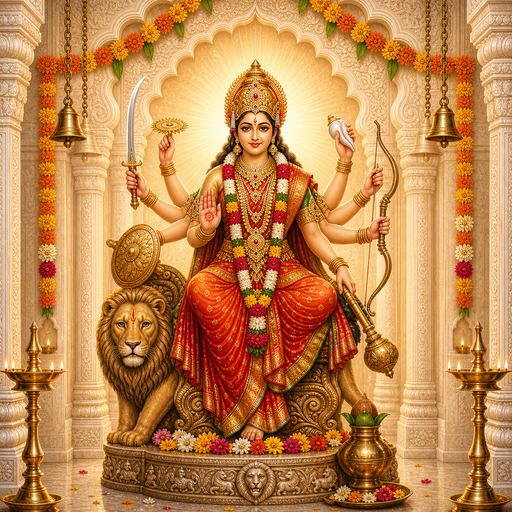
The Shri Tuljabhavani temple at Tuljapur (Dharashiv district, formerly Osmanabad) is one of the full peeths among Maharashtra's saade teen (three-and-a-half) Shaktipeeths — the kuladevata of many Marathi, Kannada, and Telugu families, and especially renowned as Chhatrapati Shivaji Maharaj's kulaswamini. The temple stands on Yamunachal hill (in the Balaghat range), on the banks of the Mandakini river, in ancient Hemadpanti-style architecture. The idol in the sanctum is believed to be swayambhu, in the form of an eight-armed Mahishasuramardini, about 3 feet tall. Its distinctive feature is Manchaki Nidra: Tuljabhavani is regarded as the only chalamurti (movable idol) among the saade teen Shaktipeeths, given a special period of rest three times a year. Main festivals: the Chaitra Purnima yatra, Sharadiya Navratri with the Dasara Simollanghan, Shakambhari Navratri, and Ashwin/Kojagiri Purnima.
This year's dates (2026)
- Shri Tuljabhavani Chaitra Yatra — the same day also brings Hanuman Jayanti, Mahalakshmi's chariot procession at Kolhapur, and the Saptashringi yatra2 Apr
- Shri Bhavanidevi Nidrakal begins — the start of Ghor-nidra, before Sharadiya Navratri3 Oct
- Shri Bhavanidevi Nidrakal ends — the devi wakes for Ghatasthapana10 Oct
- Ghatasthapana/Sharadiya Navratri begins — a general festival11 Oct
- Lalita Panchami — a general festival15 Oct
- Durgashtami/Mahaashtami — a general festival19 Oct
- Vijayadashami/Dussehra — Tuljabhavani's Simollanghan (a general festival plus a temple-specific tradition)20 Oct
- Bhavanidevi Nidrakal begins (second) — likely connected to Shram-nidra; falls two days after Dasara, a date discrepancy exists22 Oct
- Bhavanidevi Utsav - Tuljapur — consistent with the tithi for the end of Shram-nidra25 Oct
- The conclusion of Shakambhari Navratri — a general label in the panchang, with no Tuljapur tag; the official trust page, however, treats this as one of Tuljapur's main festivals3 Jan
Deity and significance
Tuljabhavani is Bhavani Mata, a form of Adishakti; the idol in the sanctum is an eight-armed Mahishasuramardini, holding a trishul, chakra, arrow, and other weapons.
The origin of the name: temple tradition holds that because she rushes swiftly to a devotee's call, her name evolved from Tvarita to Turja to Tulja (Bhavani).
Significance as kuladevata: besides Maharashtra, she is the kuladevata of many families in parts of Karnataka and Telangana; she is Chhatrapati Shivaji Maharaj's kulaswamini — historical bakhars are said to record that he sought the devi's blessing (kaul) before setting out on campaigns.
Shaktipeeth status: within Maharashtra, she is regarded as one of the full peeths among the saade teen Shaktipeeths (along with Kolhapur and Mahur; Saptashringi is the half). In the broader pan-India tradition, she is also mentioned as one of the 51 Shaktipeeths. Some Marathi sources call Tuljapur "Maharashtra's first/original Shaktipeeth."
The Gondhal tradition: Gondhal, a folk art form, has for generations been linked to the worship of the kuladevatas Tuljabhavani and Renuka — Gondhali devotees sing the devi's praises while playing the sambal and tuntune. The temple's own trust page lists Gondhal puja as one of its official daily services.
History and legend (sthal-purana)
Construction history: one source states the temple was built in 1169 CE by Maradev, a feudatory of the Kadamb dynasty; another source dates it to the Rashtrakuta or Yadava era (roughly the 13th century), and records the oldest inscription related to Tuljabhavani at Kati village in Tuljapur taluka as dating to 1397 CE. It can only be said that the temple dates to roughly the 12th-13th century, with the exact ruling dynasty varying by source. Later, in the 18th century, the Nizam's officials and the Nimbalkar family are recorded as having made major contributions.
The sthal-purana (the Kardam-Anubhuti-Kukur legend): in the Krita Yuga, after the death of the sage Kardam, his wife Anubhuti set out to become sati; other sages dissuaded her because of her young child, so she instead began tapasya on the banks of the Mandakini (on Mount Yamunachal). During her tapasya, a demon named Kukur is said to have attempted to violate her chastity; Anubhuti called out to Bhagavati, and the devi appeared and slew the demon Kukur. At Anubhuti's request, the devi is said to have taken up permanent residence on Mount Yamunachal (Balaghat) — the site later coming to be known as Tuljapur. This story is said to appear in the Skanda Purana.
The Bhavani sword and Shivaji Maharaj: a widespread popular belief in Maharashtra holds that Tuljabhavani herself gave Chhatrapati Shivaji Maharaj the "Bhavani sword," which strengthened him in establishing Hindavi Swarajya. This story is widely held, but it is not historically settled or undisputed — academic debate exists on the subject. Some popular articles claim this specific sword is currently held in a museum in the United Kingdom, but this claim has not been independently established by any primary or official source.
Architecture
Location: Yamunachal hill (in the Balaghat range), at an elevation of about 648 metres above sea level; the Mandakini river (locally mapped as the Bori) flows alongside.
Style: Hemadpanti — built of black stone, with carved pillars.
The main gates (three): the Sardar Nimbalkar gate, the Shahaji gate (named for Shivaji Maharaj's father), and the Jijabai gate (named for Shivaji Maharaj's mother) are said to exist here.
The tirthas: Gomukh Tirtha (on the right) and Kallol Tirtha (on the left) — devotees are said to bathe here before darshan.
Other shrines in the complex: shrines to sage Markandeya, Adimaya-Adishakti, Siddhivinayak, Matangi Devi, Annapurna, Datta, and Yamai Devi (regarded as the devi's sister) all stand within the same premises.
The idol's material: the exact type of stone is described differently across sources — one calls it "granite," while another describes it as "gandaki-shila, swayambhu"; it is a stone idol regarded as swayambhu.
Main festivals and yatra
Dates are taken from the panchang; all of Tuljapur's signature festivals are tithi-based. Verify all yatra dates and timings with the temple committee.
| Festival | Tithi | 2026 date | Note |
|---|---|---|---|
| Chaitra Purnima Yatra | Chaitra Shukla Purnima | 2 April | The same day also brings Hanuman Jayanti. |
| Nidrakal begins (Ghor-nidra) | Bhadrapad Krishna Ashtami | 3 October | The first rest period, before Sharadiya Navratri. |
| Nidrakal ends | Bhadrapad Amavasya | 10 October | The devi wakes for Ghatasthapana. |
| Ghatasthapana/Sharadiya Navratri begins | Ashwin Shukla Pratipada | 11 October | See Navratri for the general context. |
| Lalita Panchami | Ashwin Shukla Panchami | 15 October | See Lalita Panchami for more. |
| Durgashtami/Mahaashtami | Ashwin Shukla Ashtami | 19 October | See Durgashtami for more. |
| Vijayadashami/Dussehra — Simollanghan | Ashwin Shukla Navami (panchang label) | 20 October | See Dussehra for the general context; Tuljapur's own Simollanghan-palkhi tradition is covered below. |
| Nidrakal begins (second) | Ashwin Shukla Ekadashi (Pashankusha Ekadashi) | 22 October | Likely connected to Shram-nidra; falls two days after Dasara — see the date discrepancy below. |
| Bhavanidevi Utsav - Tuljapur | Ashwin Shukla Chaturdashi/Purnima (Kojagiri) | 25 October | See Kojagiri Purnima for the general context. |
| Shakambhari Navratri/Purnima | Paush Shukla Ashtami to Purnima | Concludes 3 January (begins December 2025, outside this panchang's coverage) | Not tagged for Tuljapur in the panchang (a general Shakambhari label), but the official trust page lists it as one of Tuljapur's four main festivals. See Shakambhari Navratri and Shakambhari Purnima for more. |
Darshan and aarti timings
The official trust page lists only office hours — not darshan hours. The timings below come only from third-party listing sites — verify any timing with the official schedule before treating it as final.
The temple is generally open from about 4:00 AM to 10:00 PM; it is said to open from 1:00 AM on Sundays, Tuesdays, and Fridays.
Kakad Aarti is at 4:30 AM; vastralankar puja/aarti at 11:00 AM and 9:30 PM; Dhoop Aarti at 12:00 PM, as recorded.
Daily services: oti bharan, abhishek puja, simhasan mahapuja, Gondhal puja, dandvat, and javal (tonsure) are listed on the official trust's service list, though the exact timing or sequence isn't specified there.
Special rituals here
Manchaki Nidra (the chalamurti tradition): Tuljabhavani is regarded as the only chalamurti among the saade teen Shaktipeeths; three times a year, for about 21 days in total, the devi is given rest on a special bed, and is regarded as "awake" for the remaining roughly 344 days.
Ghor-nidra (Bhadrapad Vadya Ashtami to Amavasya, on a silver bed, before Sharadiya Navratri).
Shram-nidra (Ashwin Shukla Dashami/Dasara to Purnima/Kojagiri, about five days, on a wooden bed from her maternal home in Ahilyanagar). The name of the third nidra varies — one source calls it "Mohanidra" (Paush Shukla Pratipada to Ashtami), while another calls it "Sukhanidra" (before Shakambhari Navratri, the same tithi range). Sources also disagree on whether Shram-nidra begins on Dasara itself or two days later.
The Simollanghan palkhi: on Vijayadashami, the devi is said to leave her throne, wrapped in 108 sarees, and complete a single pradakshina of the temple in a ceremonial palkhi that arrives from Bhingar/Burhanagar (Ahilyanagar), amid chants of "Aai Raja Udo-Udo." Popular sentiment holds that the devi's maternal home (maher) is Burhanagar/Bhingar, and her marital home (sasar) is Tuljapur.
Gondhal puja: one of the official daily services; Gondhal is a hereditary folk-art tradition connected to the worship of Tuljabhavani and Renuka.
Javal (tonsure): the practice of a child's first haircut being performed before the devi — a practice common at many Devi temples; it is also officially listed among Tuljapur's services.
The exact sequence of daily puja, abhishek, and adornment, along with the associated mantras, should be verified with the temple committee — no authoritative sequence is publicly documented.
How to reach
By rail: Solapur (about 45 km) and Dharashiv (about 22-25 km) are the nearest railway stations.
By air: Solapur airport (about 52 km) is the nearest; Latur (about 80 km), Nanded (about 212 km), and Chhatrapati Sambhajinagar (about 269 km) are other options.
By road: ST bus services are available from Latur, Solapur, Dharashiv, and Naldurg.
Distances vary slightly across sources — verify before you travel.
Nearby places
- Naldurg Fort (about 32 km) — a medieval fort, famous for its "Pani Mahal" (water palace).
- Ramtirth — near Naldurg (about 1.5 km), with Ram-Hanuman-Mahadev temples on the banks of the Bori river.
- Dharashiv Caves — a group of seven ancient caves near Dharashiv city.
- The saade teen Shaktipeeth cluster: Kolhapur Mahalakshmi, Mahur Renuka, and Saptashringi Vani.
Good to know before you go
- Expect enormous crowds during Navratri, Dasara (Simollanghan), and the Chaitra Purnima yatra — plan ahead, and check the official site for VIP-darshan/pass arrangements.
- A major development project is currently underway at the temple premises — the state government approved a temple-precinct development plan worth about ₹1,865 crore in May 2025 (targeted for completion in roughly 3 to 3.5 years) — so expect possible construction or traffic changes; check for updated information before you visit.
- An estimated 1 to 1.5 crore devotees are reported to visit Tuljapur annually — plan around the crowds accordingly.
- Follow photography/mobile-phone rules within the temple premises, and keep valuables and jewelry secure in crowded areas.
FAQ
- Whose kuladevata is Tuljabhavani?
- The kuladevata of many families across Maharashtra as well as parts of Karnataka and Telangana; especially renowned as Chhatrapati Shivaji Maharaj's kulaswamini.
- What is the difference between Tuljapur's Tuljabhavani and Kolhapur's Ambabai?
- Both are regarded as full peeths among the saade teen Shaktipeeths; Tuljabhavani is an eight-armed Mahishasuramardini and a chalamurti (observing Manchaki Nidra), while Ambabai takes the form of Mahalakshmi and is known for the Kiranotsav.
- What is Tuljabhavani's Manchaki Nidra?
- Three times a year, for about 21 days in total, the devi is believed to rest on a special bed — the first (Ghor-nidra) falls before Sharadiya Navratri, from Bhadrapad Vadya Ashtami to Amavasya.
- Who gave Shivaji Maharaj the Bhavani sword — is this legend true?
- Popular belief holds that the devi herself gave Shivaji Maharaj the sword; historically, this claim is not conclusively settled, and scholars disagree on it.
- How do I reach Tuljapur?
- By rail via Solapur or Dharashiv; by air, Solapur airport is the nearest; by road, ST buses run from Latur, Solapur, Dharashiv, and Naldurg.
- What are the saade teen Shaktipeeths?
- Kolhapur, Tuljapur, and Mahur (the full peeths), and Saptashringi Vani (the half).
- What are the darshan timings at the Tuljapur temple?
- Generally from about 4:00 AM to 10:00 PM; check the official schedule for the exact aarti timings.
Related Info
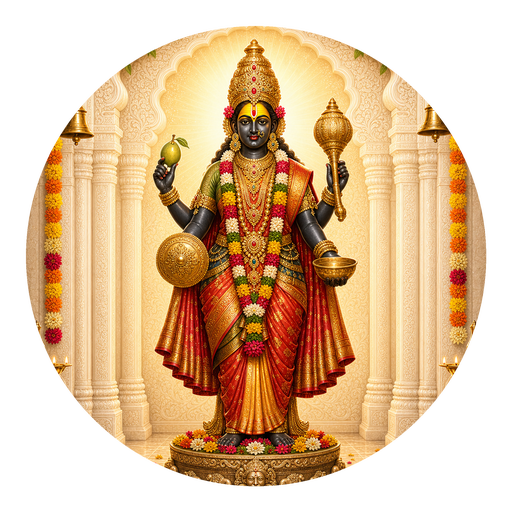 Kolhapur Mahalakshmi (Ambabai)11 Oct
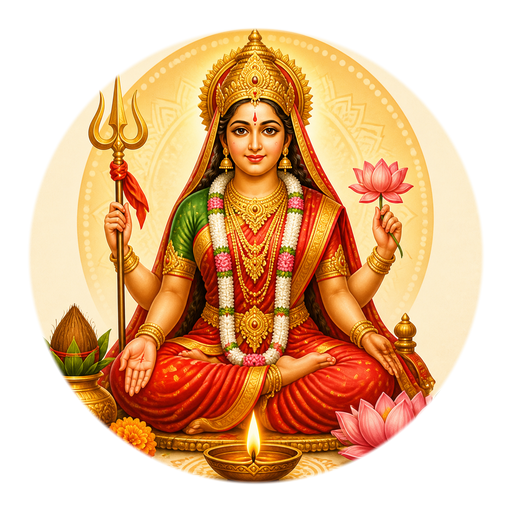 Mahur — Renuka Mata11 Oct
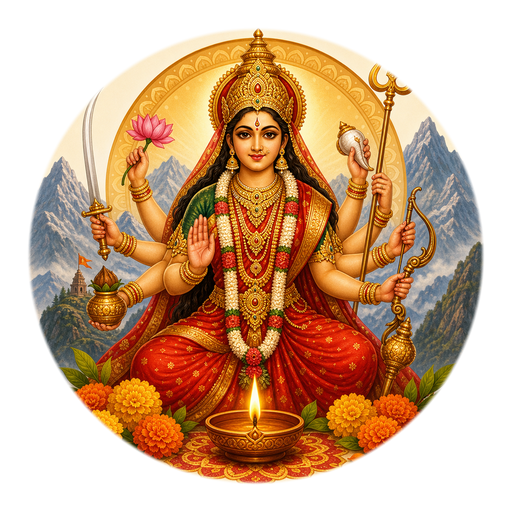 Saptashrungi Devi Temple, Vani26 Mar
 Navratri11 Oct
 Lalita Panchami15 Oct
- Durgashtami26 Jan
 Dussehra / Vijayadashami20 Oct
 Kojagiri Purnima (Sharad Purnima)25 Oct
 Hanuman Jayanti2 Apr
- Shakambhari Navratri3 Jan
- Shakambhari Purnima3 Jan
- Banada Ashtami
 Ekvira Devi — Karla, Lonavala25 Mar