Bhaum Pradosh
Pradosh vrat is a Shiva observance kept on Trayodashi tithi every month, in both the Shukla and Krishna paksha. When this Trayodashi falls on a Tuesday, it is called Bhaum Pradosh (also Mangal Pradosh). The core vrat remains dedicated to Shiva, but because it falls on Tuesday, it is also connected with the planet Mangal (Mars) and Hanuman — Bhaum Pradosh is considered especially auspicious for debt relief (runmochan). In 2026 this coincidence happens twice — 25 August and 8 September.
This year's dates (2026)
Significance
Pradosh is the twilight window that begins right after sunset, before night sets in. When Trayodashi tithi and this pradosh window coincide, it is considered the most auspicious moment for Shiva worship — tradition holds that all the gods gather on Kailash to worship Shiva at this hour.
The exact clock time for pradosh kaal varies by city — check that day's panchang page for the precise window.
Because Tuesday is ruled by the planet Mangal (Mars), Shiva worship on this day carries special significance connected with Mars.
According to legend, Mangal (Mars) performed severe penance to Lord Shiva, who was pleased and granted him Mangal Loka (his own realm). This is believed to be why Tuesday and the planet Mars came to be associated with Shiva devotion.
The most prominent benefit of Bhaum Pradosh is runmochan — a widespread and consistently repeated belief that it brings relief from debts and financial troubles. Good health, a softening of Mangal dosha, and relief from fear, grief, and family troubles are also believed benefits.
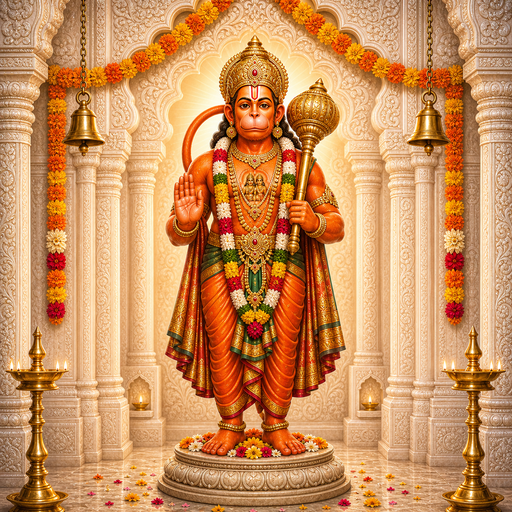
Bhaum Pradosh is also widely connected with Hanuman in many traditions, since Tuesday is traditionally Hanuman's day too (in some traditions, Hanuman is considered a significator of Mars). The core vrat remains Shiva's Trayodashi observance; Mangal and Hanuman are Tuesday-specific additions.
Bhaum Pradosh, too, can fall in either paksha — in 2026, 25 August falls in Shukla paksha, and 8 September in Krishna paksha. Both dates happen to fall within the Shravan masa this year.
The legend
Three distinct legends are connected with Bhaum Pradosh — kept separate here, not blended into one.
When the gods and demons churned the ocean, it released a terrible poison called Halahal, capable of destroying all creation. To protect creation, Shiva himself drank that poison — and from then on came to be known as Neelkanth. This is believed to have happened on Trayodashi, during the pradosh window itself; pleased afterward, Shiva performed his joyful Tandava dance on Kailash — this legend is shared across the whole Pradosh family.
A second, Mars-specific legend is also told — Mangal (Mars) performed severe penance to Lord Shiva. Pleased, Shiva granted him Mangal Loka, his own independent realm. This is believed to be why Tuesday and the planet Mars became linked with Bhaum Pradosh.
A third strand comes from the Hanuman tradition — an elderly widow, a devoted follower of Hanuman, kept a strict fast every Tuesday. One day a sage (Hanuman in disguise) visited her and, to test her devotion, asked her to cook food over a fire lit on her own son's back. Anguished, she obeyed; when the sage then called out to the boy, he appeared alive and unharmed — the sage revealed his true form as Hanuman and blessed mother and son. This story originates in the separate Tuesday-Hanuman vrat tradition, not from Pradosh itself — it is drawn into Bhaum Pradosh because both fall on Tuesday.
A fourth, weekday-agnostic story about the vrat's reward is also told — a widowed Brahmin woman's adopted orphan prince regained his marriage and lost kingdom through the merit of Pradosh vrat. This story is shared across the whole Pradosh family, not specific to Tuesday.
Who observes it
All Shiva devotees — regardless of gender or age — observe this vrat for wish-fulfilment, relief from planetary afflictions, and Shiva's grace. Bhaum Pradosh in particular is believed to be observed by those in debt or facing financial difficulty, and those with a weak or afflicted Mars (Mangal dosha) in their birth chart. Hanuman devotees are also believed to add Hanuman worship on this day, since it falls on a Tuesday.
Puja vidhi
- A sankalp (vow) is taken during the day and a fast is kept — bathing before sunrise, followed by a waterless fast or a fruit-only diet.
- In the evening, at sunset, a second bath is taken to prepare for the puja.
- During the pradosh window, a full shodashopachar puja (16-step worship) is offered to the Shiva lingam or murti.
- Abhishek is performed with water, milk, and panchamrit; bilva leaves and red flowers (red being considered Mars's colour) are offered, along with sandal paste, unbroken rice, and incense-lamps.
- The mantra 'Om Namah Shivaya' is chanted; some traditions add the Mangal seed-mantra and remembrance of Hanuman's name.
- After listening to the vrat katha and the aarti, the fast is broken by tradition.
What you need
A Shiva lingam or murti (or one made of turmeric-kumkum or clay), bilva leaves, water/Gangajal, milk-panchamrit, sandalwood paste, unbroken rice, red flowers, incense-lamps, an offering of fruit, and red or white clothing. Some traditions also include a Hanuman image or sindoor.
 Shiva lingam or murti
 Bilva leaves
 Water / Gangajal
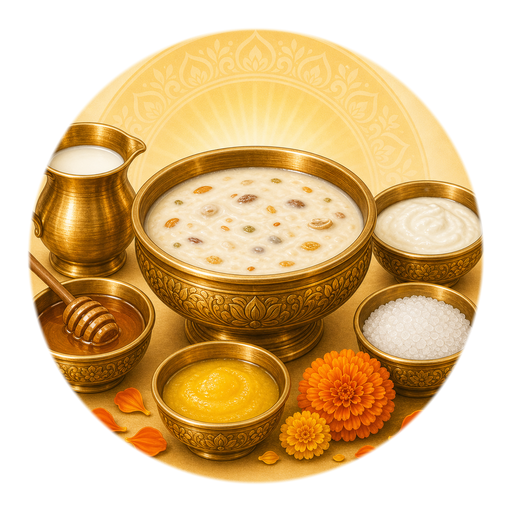 Milk-panchamrit
 Sandalwood paste
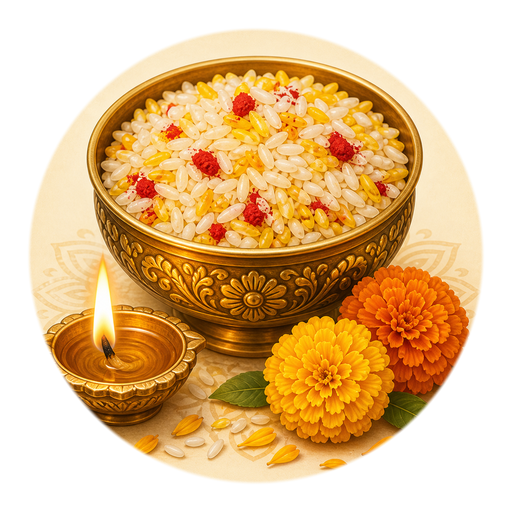 Unbroken rice
 Red flowers
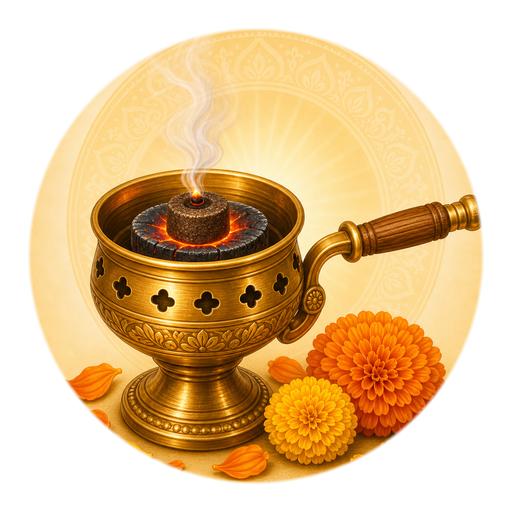 Incense
 Lamp
Lamp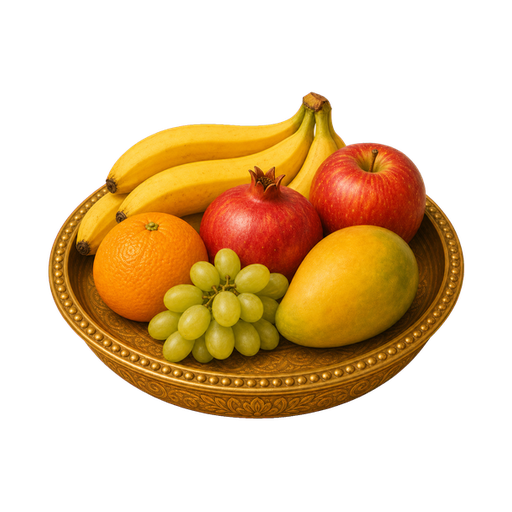 Fruit offering
 Red or white clothing
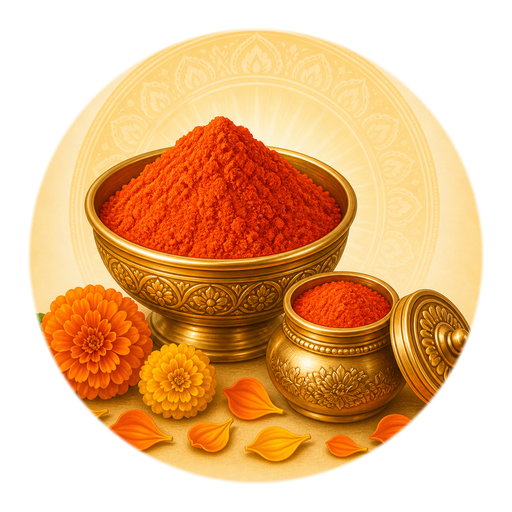 Sindoor
Fasting
Fasting is not mandatory — depending on capacity, some keep a full waterless fast, others eat only fruit. Grains, rice, and plain salt are avoided; restraint is recommended.
Mantra & aarti
The five-syllable mantra 'Om Namah Shivaya' (meaning: salutations to Shiva) is the core mantra of Pradosh worship. Some traditions also chant the Mangal seed-mantra on Bhaum Pradosh.
A traditional Marathi aarti, "Lavathavati Vikraala" by Samarth Ramdas, is sung to Shiva on this occasion — it opens with "Lavathavati vikraala brahmandi maala…"
Regional customs
Maharashtra follows the amanta calendar, where Trayodashi is counted in both pakshas — so Bhaum Pradosh can fall in any masa, in either paksha.
Do not confuse the four distinct Tuesday-related vrats: Bhaum Pradosh (tied to Trayodashi tithi, in any masa); Mangalvar vrat / Hanuman vrat (tithi-independent, every Tuesday); Mangala Gauri (only on Tuesdays within Shravan masa, for newly married women, Devi-focused); and Angarki Sankashti (Chaturthi tithi on a Tuesday, Ganesh-focused). All four are Tuesday-linked but remain distinct vrats.
Bhaum Pradosh (Trayodashi, evening) and Masik Shivratri (Chaturdashi, midnight) are consecutive but distinct tithis — these should not be confused with each other.
Good to know
- The exact pradosh-kaal time depends on sunset and varies by city — check that day's panchang page, along with its Rahukaal window, for the precise timing.
- Handle debt-relief claims with care — "debt relief" is a matter of belief, not financial advice; readers with real debt or financial concerns should consult a qualified financial advisor.
- A waterless fast isn't suitable for everyone — those with diabetes, blood pressure issues, pregnant women, and the elderly should choose the fruit-only option.
- Bhaum Pradosh, Mangalvar-Hanuman vrat, Mangala Gauri, and Angarki Sankashti are four distinct Tuesday-related vrats.
FAQ
- What is Bhaum Pradosh?
- The Shiva Pradosh vrat observed when Trayodashi tithi falls on a Tuesday; associated with the planet Mangal (Mars) and Hanuman.
- When is Bhaum Pradosh in 2026?
- Tuesday, 25 August (Shravan Shukla Trayodashi) and 8 September (Shravan Krishna Trayodashi).
- How is Bhaum Pradosh believed to help with debt relief?
- Because it is linked to the planet Mars, Bhaum Pradosh vrat-puja is widely believed to bring relief from debts and financial troubles — this is a belief, not financial guarantee.
- Is Bhaum Pradosh dedicated to Shiva or Hanuman?
- The core vrat is Shiva's Trayodashi observance; because it falls on Tuesday, many traditions also mention Hanuman (from the Tuesday-Hanuman tradition) — both are presented together.
- What is pradosh kaal?
- The twilight window right after sunset, before night sets in — considered the best time for Shiva worship. Check that day's panchang page for the exact window.
- Does Bhaum Pradosh fall in Shukla or Krishna paksha?
- Either — in 2026, 25 August falls in Shukla paksha and 8 September in Krishna paksha.
- How is the vrat observed and what can be eaten while fasting?
- A fast is kept through the day, and during pradosh kaal a Shiva abhishek is performed with bilva leaves offered, chanting 'Om Namah Shivaya'; the fast is either waterless or fruit-only.
- What is the story behind Bhaum Pradosh?
- The Samudra Manthan/Neelkanth story (why the pradosh window is sacred), Mangal's penance and the granting of Mangal Loka (Mars-specific), and the Hanuman-widow-son story (from the Tuesday-Hanuman tradition) — three distinct legends.
Related Info
 Soma Pradosh16 Mar
 Shani Pradosh14 Feb
- Budh Pradosh15 Apr
- Guru Pradosh14 May
 Shukra Pradosh16 Jan
 Ravi Pradosh1 Mar
 Mangalvar Vrat (Hanuman)
- Hanuman Jayanti2 Apr
- Mangala Gauri18 Aug
 Sankashti Chaturthi6 Jan
- Maha Shivratri15 Feb
- Masik Shivratri16 Jan
 Jyotirlinga15 Feb
 Bhimashankar15 Feb
 Grishneshwar15 Feb
 Trimbakeshwar14 Jan