Vishnu Dashavatar
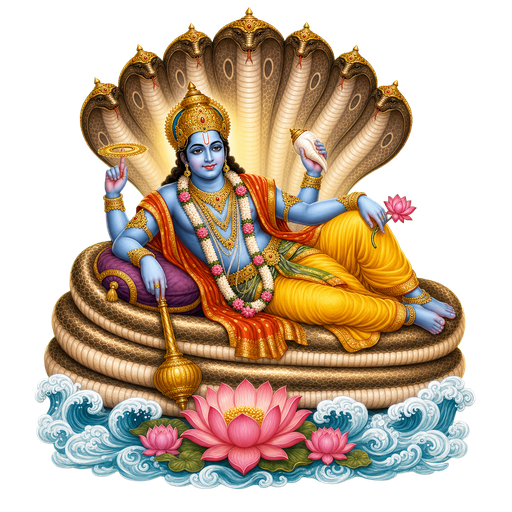
Dashavatar refers to the ten principal avatars (incarnations) of Lord Vishnu — from Matsya to Kalki — believed to have been taken, one after another, to restore dharma whenever adharma grew too strong. Kalki, the last of the ten, hasn't happened yet — by tradition, he is believed to appear in the future, at the end of Kali Yuga.
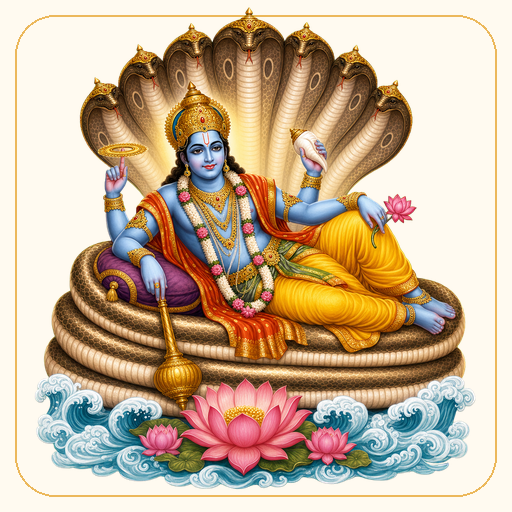
A verse from the Bhagavad Gita — "Yada yada hi dharmasya glanir bhavati Bharata, abhyutthanam adharmasya tadatmanam srijamyaham" ("Whenever dharma declines, I manifest myself") — is considered the core idea behind the Dashavatar concept.
The most widely cited order, based on Jayadeva's Gita Govinda (composed around the 12th century), runs: Matsya → Kurma → Varaha → Narasimha → Vamana → Parashuram → Ram → Krishna → Buddha → Kalki. But this is not the only list — traditions differ by sampradaya, covered below under "How the list differs by tradition."
Significance
The core idea behind Dashavatar is that whenever injustice or adharma in the world becomes extreme, Vishnu is believed to take on a form suited to that particular crisis to restore order. Each avatar is said to answer a specific crisis — a great deluge, the churning of the ocean, the earth being dragged away, a misused boon, arrogant kings, or unjust rulers.
Some scholars read the avatar sequence as a kind of ascending progression — from a simple aquatic being (Matsya) to fully human-divine forms (Ram/Krishna) and finally a future form (Kalki) — but this is an observational reading, not an established doctrine. In 1873, Bhaktivinoda Thakur, and later Helena Blavatsky, drew a parallel between this sequence and Darwinian evolution (aquatic → amphibian → mammal → human) — but this is a 19th-century modern interpretive reading, not ancient scripture; some traditionalist devotees reject this reading as diminishing avatars like Ram and Krishna.
The "Dashavatar" list itself is a popular, selective subset made famous by Jayadeva's Gita Govinda — the Bhagavata Purana itself gives a much larger list of twenty-four avatars, in which Matsya comes tenth (not first). In other words, "Dashavatar" is a popular, widely used framework, not the complete Bhagavata Purana doctrine.
How the list differs by tradition
The "most widely cited" order above is based on the Gita Govinda, but the differences across sampradayas are notable:
| Tradition | 8th/9th avatar | Note |
|---|---|---|
| Gita Govinda (Jayadeva) — most widely cited | Krishna, Buddha | The main order used on this page |
| Smarta / Shaiva Siddhanta / Sri Vaishnava | Balarama, Krishna | Buddha excluded |
| Gaudiya Vaishnava | Balarama, Buddha | Krishna is regarded as the source of all avatars, not merely one avatar |
| Goshthanath Math | Balarama, Jagannath | A different pairing altogether |
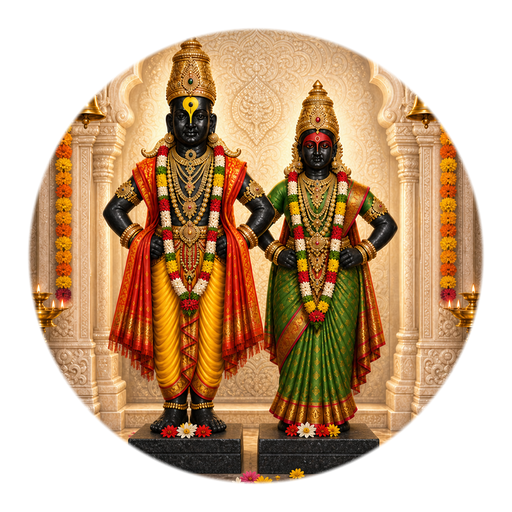
| Warkari sampradaya (Maharashtra) | Krishna, Vithoba | Pandharpur's Vitthal is considered a regional form of Krishna/Vishnu's avatar — Vithoba doesn't appear in the standard Dashavatar list, but within Maharashtra's own devotional tradition, this distinction carries real meaning |
So no single list should be taken as "the one correct" order — it varies by family and sampradaya tradition.
The ten avatars, in order
The full legend for each avatar is on that avatar's own page.
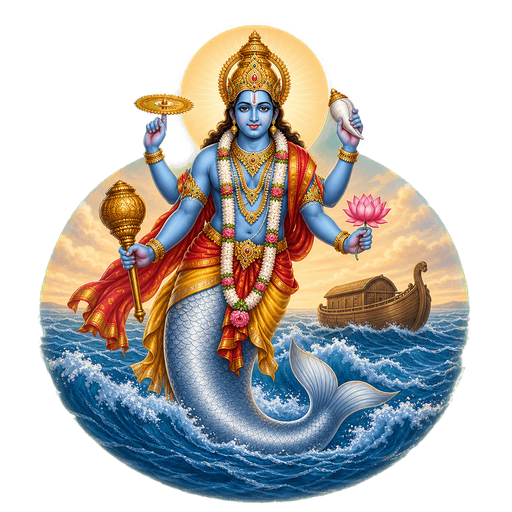
1. Matsya (the fish)
Vishnu's first avatar. Two versions of the Matsya legend are widely told.
In one version, King Satyavrata (Manu) finds a tiny fish; the fish keeps growing enormously; finally, when the great deluge arrives, that same fish — itself a form of Vishnu — ties Satyavrata's boat to its horn and carries it safely to a mountain, saving humankind and the seeds of life. In another version, the demon Hayagriva steals the Vedas from Brahma; Vishnu takes the form of Matsya, kills Hayagriva, and recovers the Vedas. Both stories carry the same spirit — the protection of knowledge and creation.
Matsya Jayanti is traditionally observed on Chaitra Shukla Tritiya (21 March in 2026). The full legend and date are on the Matsya Jayanti page.
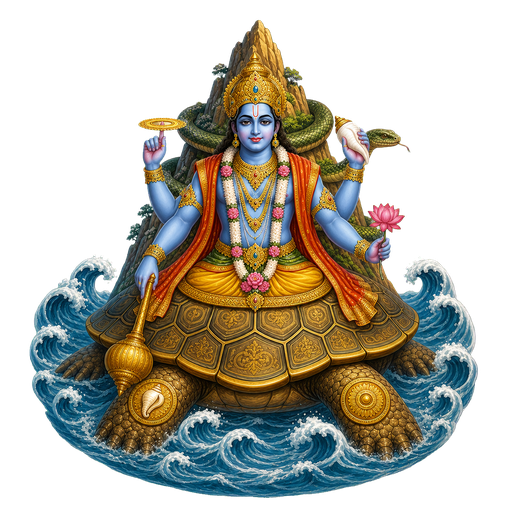
2. Kurma (the tortoise)
Vishnu's second avatar — he supported Mount Mandara, which was sinking during the churning of the ocean, on his own back, making the churning for amrita possible. The full legend, tithi, and significance are on the Kurma Jayanti page.
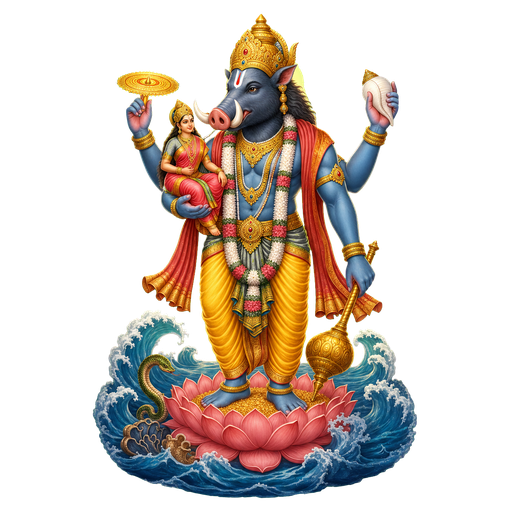
3. Varaha (the boar)
Vishnu's third avatar — he lifted the earth goddess Bhudevi, dragged to the ocean floor by the demon Hiranyaksha, up on his tusks. The full legend is on the Varaha Jayanti page.
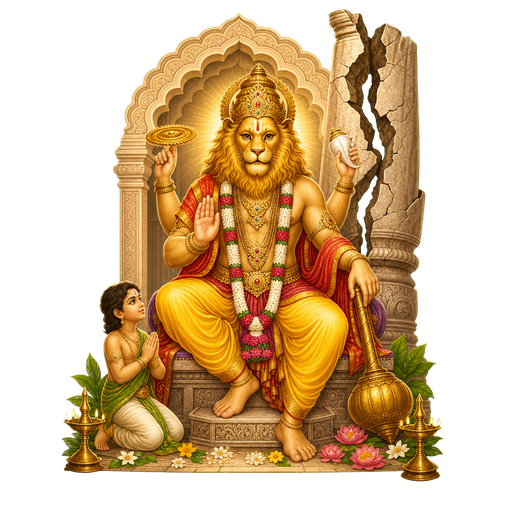
4. Narasimha (man-lion)
Vishnu's fourth avatar — he slew Hiranyakashipu by defeating every condition of the demon's boon (not by day or night, not indoors or outdoors, not by any weapon) and protected the devotee Prahlad. The full legend is on the Narasimha Jayanti page.
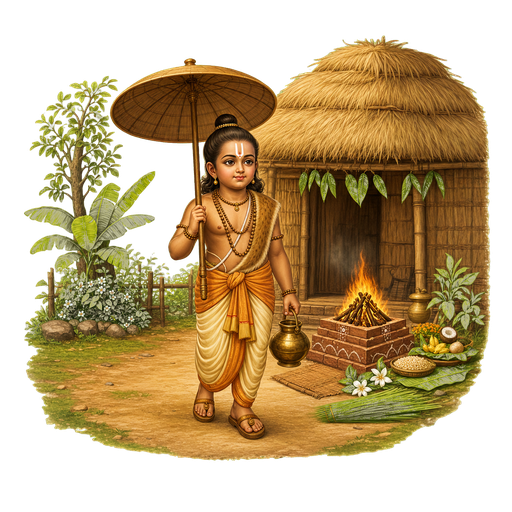
5. Vamana (the dwarf brahmin)
Vishnu's fifth avatar — he asked King Bali for three paces of land, then, taking the vast Trivikrama form, covered all three worlds in just two steps. The full legend is on the Vamana Jayanti page.
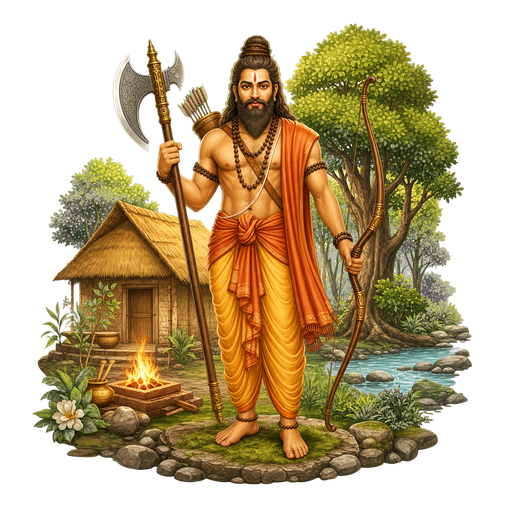
6. Parashuram
Vishnu's sixth avatar — known for subduing unjust kshatriya rulers, and regarded as immortal (chiranjeevi); Maharashtra's own belief that he created the Konkan coastline is linked to him. The full legend is on the Parshuram Jayanti page.
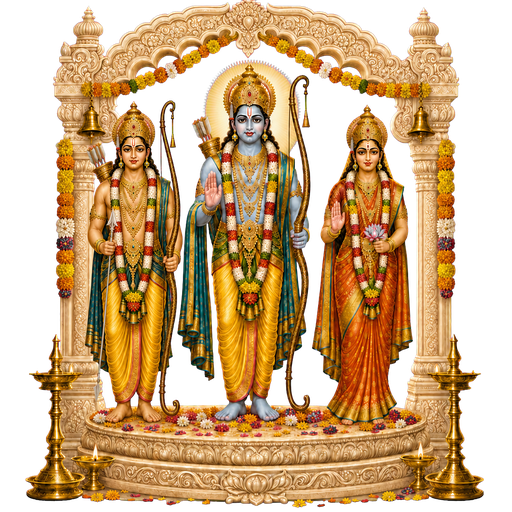
7. Ram
Vishnu's seventh avatar — the ideal king (maryada purushottam) of Ayodhya; his story centres on the killing of Ravan and the restoration of dharma. The full detail is on the Ram Navami page.
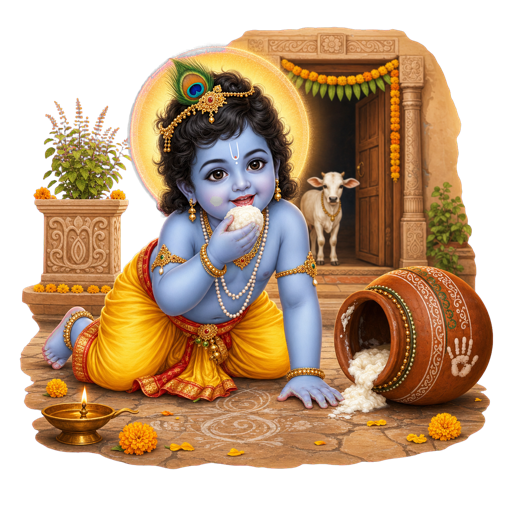
8. Krishna
Vishnu's eighth avatar — in some traditions considered a "purna avatar" (Vishnu's own complete form, not a partial incarnation). He is central to the Mahabharata and the Bhagavad Gita; revered for his childhood pastimes in Gokul, the killing of Kansa, and his teaching on the battlefield of Kurukshetra. The full birth legend, puja vidhi, and Dahi Handi detail are on the Gokulashtami page.
In some traditions (Smarta, Shaiva Siddhanta, Sri Vaishnava), Balarama appears in the avatar list instead of or alongside Krishna — see the tradition table above.
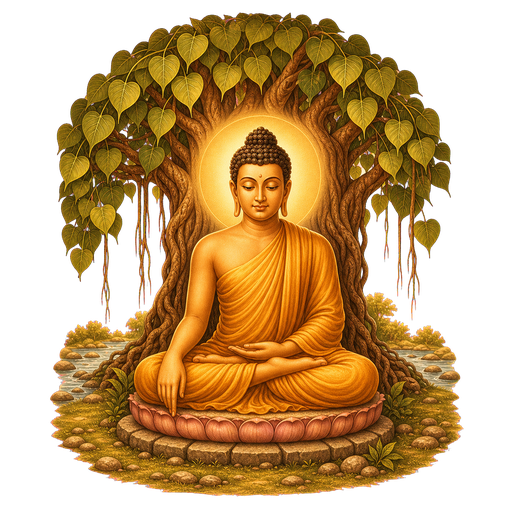
9. Buddha
Considered Vishnu's ninth avatar — but this inclusion is specifically a Vaishnava/Hindu tradition. Buddhist tradition itself does not consider the Buddha an avatar of Vishnu — Dr. B. R. Ambedkar explicitly rejected this in the fifth of his 22 vows of 1956. Both viewpoints are presented fully and in balance on the Buddha Purnima page.
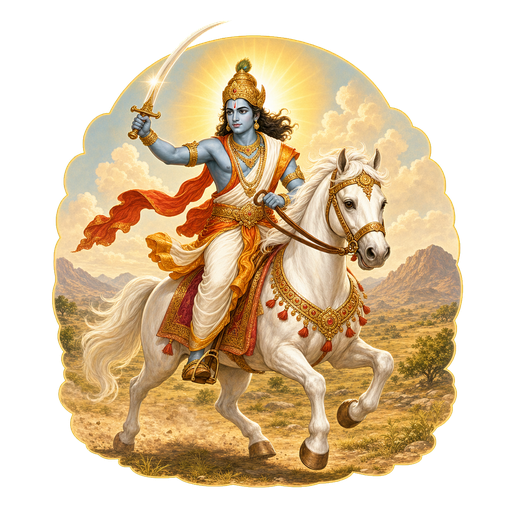
10. Kalki
Vishnu's tenth and final avatar — this avatar has not happened yet. By tradition, Kalki is predicted to appear in the future, at the end of Kali Yuga — this is a matter of predictive belief, not a past historical event.
According to the Kalki Purana, he will be born in a village called Shambhala, to Vishnuyash (father) and Sumati (mother), and will ride a white horse named Devadatta, destroying adharma with a blazing sword and restoring dharma and the Satya Yuga. Kali Yuga's total duration is traditionally held to be about 432,000 years — meaning, by tradition, this arrival lies very far in the future.
There are records of certain modern individuals or movements presenting themselves as Kalki, but such claims are considered outside mainstream Sanatan Hindu scripture.
Full detail is on the Kalki Jayanti page.
Who observes it
Generally, all devotees of Vishnu regard the Dashavatar concept as central to Vaishnava worship; each avatar's own jayanti is observed on its own tithi (see each page for detail).
In Maharashtra, the Warkari sampradaya offers daily worship to Vithoba as a form of Krishna/Vishnu; the Ekadashi vrat is the central practice of this devotion.
Which avatar is considered "foremost" varies by sampradaya and family tradition — this shouldn't be taken as a universal ranking.
Mantra & stotra
Jayadeva's "Dashavatara Stotra" (from the Gita Govinda, around the 12th century) is a well-known Sanskrit stotra that describes all ten avatars together — each verse describes one avatar, closing with a recurring line saluting Keshava as the protector of creation.
Avatar-specific mantras and stotras (such as the Narasimha Kavach or Ram Raksha) are on that avatar's own page.
The Dashavatar aarti
"Aarati Saprem Jay Jay Vitthal Parabrahma" is the aarti traditionally sung right after the Vitthal aarti and before Ghalin Lotangan in the daily aarti sequence — it describes all ten avatars together.
Regional customs
The Warkari sampradaya's Vithoba distinction, specific to Maharashtra, is covered above under "How the list differs by tradition." The Konkan belief that Parashuram created the coastline is detailed on the Parshuram Jayanti page.
This year's dates
Each avatar's own jayanti falls on a different tithi, explained on that avatar's own page. The 2026 dates for all ten avatars:
| Avatar | Jayanti tithi | 2026 date | Page |
|---|---|---|---|
| Matsya | Chaitra Shukla Tritiya | 21 March | Matsya Jayanti |
| Kurma | Vaishakh Purnima | 1 May | Kurma Jayanti |
| Varaha | Bhadrapad Shukla Dwitiya/Tritiya | 13 September | Varaha Jayanti |
| Narasimha | Vaishakh Shukla Chaturdashi | 30 April | Narasimha Jayanti |
| Vamana | Bhadrapad Shukla Dwadashi | 23 September | Vamana Jayanti |
| Parashuram | Vaishakh Shukla Tritiya | 19 April | Parshuram Jayanti |
| Ram | Chaitra Shukla Navami | 26 March | Ram Navami |
| Krishna | Shravan Krishna Ashtami | 4 September | Gokulashtami |
| Buddha | Vaishakh Purnima | 1 May | Buddha Purnima |
| Kalki | Shravan Shukla Shashthi | 18 August | Kalki Jayanti |
Good to know
- If you need a specific avatar's exact jayanti date or that day's puja timing, check that avatar's own page or today's panchang.
- Your own family's or sampradaya's list may differ from the "most widely cited" order given above — treat that as the tradition that applies to you.
FAQ
- What is Dashavatar?
- The ten principal avatars of Lord Vishnu — forms he is believed to have taken, one after another, to restore dharma whenever adharma grew strong.
- What are Vishnu's ten avatars, and in what order?
- The most widely cited order is Matsya, Kurma, Varaha, Narasimha, Vamana, Parashuram, Ram, Krishna, Buddha, Kalki (based on Jayadeva's Gita Govinda).
- Is the Dashavatar order the same across all Puranas?
- No — some traditions have Balarama instead of Buddha, the Warkari sampradaya pairs Krishna with Vithoba, and the Bhagavata Purana itself gives an entirely different, larger list of twenty-four avatars in which Matsya comes tenth.
- Why and how is Buddha included among the Dashavatar? Does Buddhism accept this too?
- This is a Vaishnava/Hindu tradition inclusion; Buddhist tradition does not consider the Buddha an avatar of Vishnu (Dr. Ambedkar explicitly rejected this).
- Why hasn't the Kalki avatar happened yet? When will it come?
- By tradition, he is predicted to appear only at the end of Kali Yuga — and Kali Yuga's own duration is traditionally held to be about 432,000 years, so this future lies very far ahead.
- What is the Matsya avatar known for?
- The fish-form first avatar Vishnu took either to save Satyavrata/Manu from the great deluge, or to recover the Vedas from the demon Hayagriva (two versions).
- Is any connection drawn between Dashavatar and Darwin's theory of evolution?
- In the 19th century, some thinkers (Bhaktivinoda Thakur, Blavatsky) drew this parallel (aquatic → amphibian → human) — but this is a modern interpretive reading, not ancient doctrine; some traditionalists reject it.
- Why do some traditions include Balarama instead of Buddha?
- The Smarta, Shaiva Siddhanta, and Sri Vaishnava traditions use the Balarama-Krishna pairing (excluding Buddha); Gaudiya Vaishnavas consider Krishna the source of all avatars rather than merely one avatar, so their list carries Balarama-Buddha instead.