Matsya Jayanti
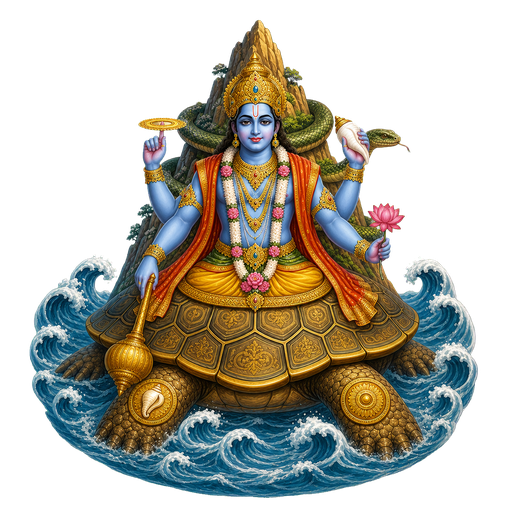
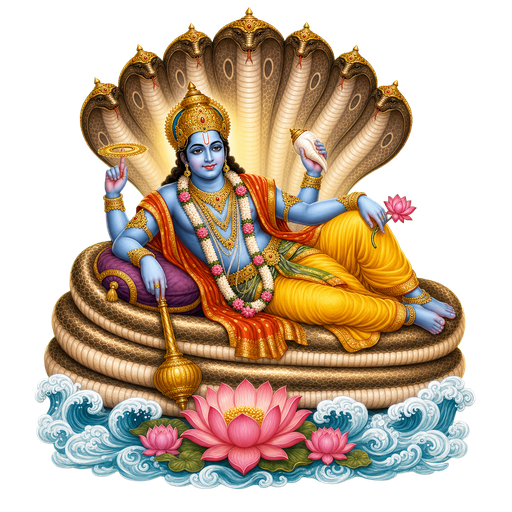
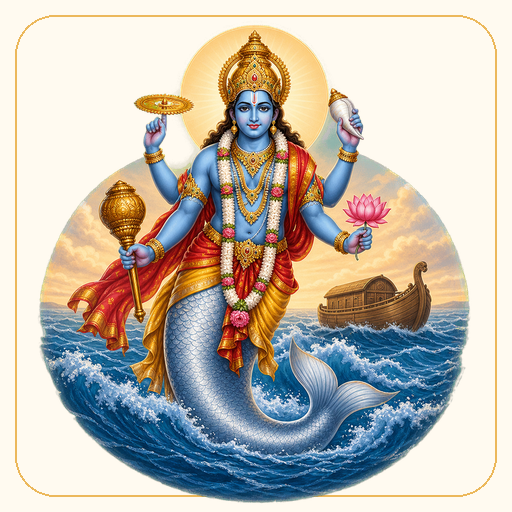
Matsya Jayanti marks the anniversary of Lord Vishnu's Matsya (fish) avatar — regarded as Vishnu's first avatar in most dashavatar lists (though the Bhagavata and Garuda Puranas' separate 24-avatar list places him tenth — explained below). This Jayanti falls on Chaitra Shukla Tritiya; in 2026, it falls on Saturday, 21 March — the same day Chaitragaur begins. The Puranas describe two versions of this avatar's legend — a tiny fish that grows and rescues Manu (or King Satyavrata) from a great flood, or a fish that recovers the Vedas stolen by the demon Hayagriva — both versions centred on the protection of knowledge and creation.
This year's dates (2026)
Matsya is an avatar of Vishnu, not a historical or Puranic person — so, like Kurma Jayanti and the other avatar Jayantis, this page stays legend-centred and brief. Two clearly distinct versions of the Matsya legend are found in the Puranas — neither is considered the final or original one.
Significance
Matsya is regarded as the first of Vishnu's ten avatars in most dashavatar lists — an early stage in the series of avatars Vishnu is believed to take from time to time to protect creation.
The central legend: a tiny fish gradually grows larger, and eventually, in a moment of crisis (a great flood, or the loss of the Vedas), saves humankind or knowledge itself.
A difference in avatar order: the Bhagavata Purana and the Garuda Purana, in their own separate list of 24 avatars overall, place Matsya tenth — not first. This isn't a contradiction; the "dashavatar" (ten avatars) is a popular, selective subset list, while the Bhagavata's full avatar doctrine is a separate, larger one. Both are true, and neither is the "correct" one.
A devotional meaning: a divine form that grows from the tiny to the immense, ultimately bearing the weight of all creation — regarded as a symbol of perseverance and the protection of creation.
The legend — two versions
Both versions below are drawn from different Puranas (the Vishnu Purana, the Bhagavata Purana, and others).
Version one — the Manu/Satyavrata flood legend
King Manu (called Satyavrata in the Bhagavata Purana, and later Vaivasvata Manu) finds a tiny fish in a river. The fish asks for protection; Manu places it in a pot, then a well, then a pond, then a river, and finally the ocean — the fish grows larger each time. The fish then warns Manu of an approaching great flood and tells him to build a boat; in some versions, the seven sages and seeds/plants and animals are also taken aboard. When the flood arrives, Matsya ties the boat to his horn and carries Manu to safety. In the Bhagavata Purana, the fish also imparts spiritual teaching at the end; in some versions, he finally reveals himself as Brahma.
Version two — the demon Hayagriva and the stolen Vedas
The demon Hayagriva steals the four Vedas from Brahma — or, in another telling, the Vedas slip out through Brahma's yawn while he sleeps and fall into Hayagriva's possession — and hides them at the bottom of the ocean. With knowledge lost, adharma (unrighteousness) spreads through creation. Vishnu takes the Matsya (fish) form, goes to the ocean floor, kills Hayagriva, recovers the Vedas, and returns them to Brahma. This version, too, is widely told.
Differences (in some versions): the central figure is Manu (in the Shatapatha Brahmana/Mahabharata), King Satyavrata (in the Bhagavata), or the sage Kashyapa (in the Padma Purana); the demon's name is Hayagriva or Shankha (in the Padma/Skanda Puranas); the boat is tied using Matsya's horn and a rope, or, in the Matsya Purana, using the serpent Shesha as a rope; the Narada Purana places the event in the Badari forest. At the end, the fish reveals himself as Brahma in some versions, and clearly as Vishnu in others — the final identity varies by version.
The Varaha Purana and the Padma Purana's Margashirsh-mahatmya describe a separate, three-day Margashirsh festival (ending on Dwadashi, with worship of a golden fish) — this is a different observance from Matsya Jayanti (Chaitra Tritiya); the two shouldn't be confused.
Who observes it
Vishnu devotees and those within the Vaishnava tradition observe Matsya Jayanti as a Vishnu-avatar Jayanti. In Maharashtra, this is not a widespread festival — like Kurma Jayanti, it is chiefly a panchang-level day; for most people, this day is better known as the start of Chaitragaur and the period of Chaitra Navratri.
Puja vidhi
These are mostly general Vishnu-vrat practices; no solid, independent reference for an ancient ritual specific to Matsya was found. A fast is kept from the day before through the Jayanti day. On the day itself: a morning bath and clean clothing; worship of a Vishnu/Matsya image or a Shaligram; a panchamrit abhishek and naivedya; an evening Vishnu/Matsya puja; and recitation or listening to portions of the Matsya Purana — all considered auspicious. In some versions, offering water or flour balls to fish is considered meritorious — this is a popular, regional practice, not universal. No distinct, standardised udyapan ritual for Matsya Jayanti was found.
A Vishnu/Matsya image or Shaligram, a kalash (with mango leaves and a coconut), tulsi leaves, yellow flowers, sandalwood paste, panchamrit, an incense-lamp, and naivedya — an indicative list; regional variation is possible.
Those observing the vrat may fast from the day before through the Jayanti day, breaking the fast after the evening puja — this is optional and by tradition, and can vary by household or local custom.
Mantra
Commonly chanted: 'Om Namo Bhagavate Vasudevaya,' 'Om Namo Narayanaya,' the Matsya-specific 'Om Matsyaya Namah,' and recitation of the Matsya Purana. These are ancient, widely used Vishnu mantras.
Regional customs
Maharashtra has almost no distinct custom of its own for Matsya Jayanti — this is a minor panchang entry; the same day's Chaitragaur beginning, the Chaitra Navratri period, and Ramzan Eid are more prominent.
A handful of minor Matsya-related temples and sculptures exist — the Vedanarayana temple (Nagalapuram), the Shankhoddhar temple (Bet Dwarka), the Matsya Narayana temple (Bengaluru), Matsya sculpture at the Chennakeshava temple (Somanathapura), three temples in Kerala, and Machhegaun (Nepal) — but none of these is a single, prominent, nationally famous Matsya-dedicated pilgrimage site the way Kurma's Srikurmam is, and none of them is in Maharashtra.
The Meena community (chiefly in Rajasthan) traces its lineage to the Matsya avatar and separately observes 'Meenesh Jayanti' — an example of a distinct, community-specific practice outside Maharashtra; this is not presented here as a "Maharashtra practice."
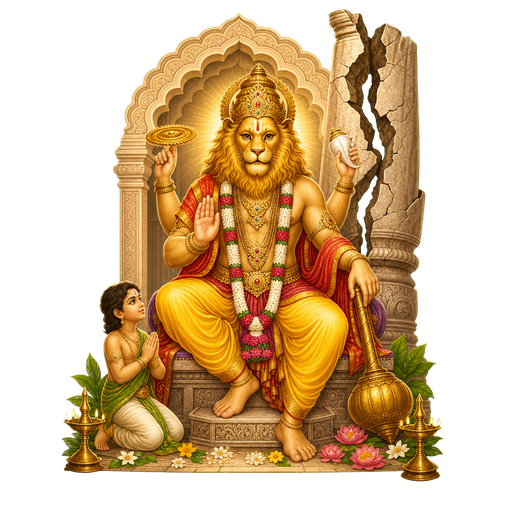
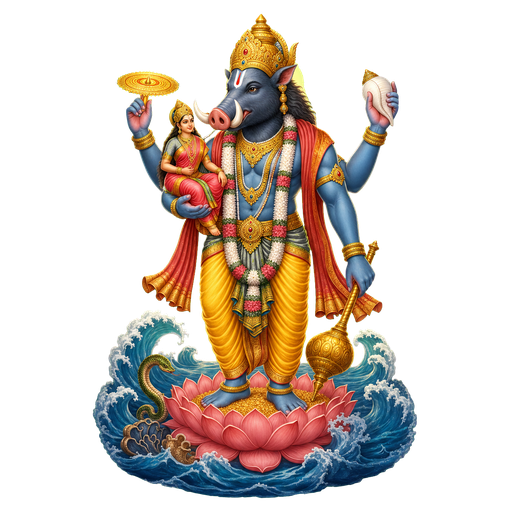
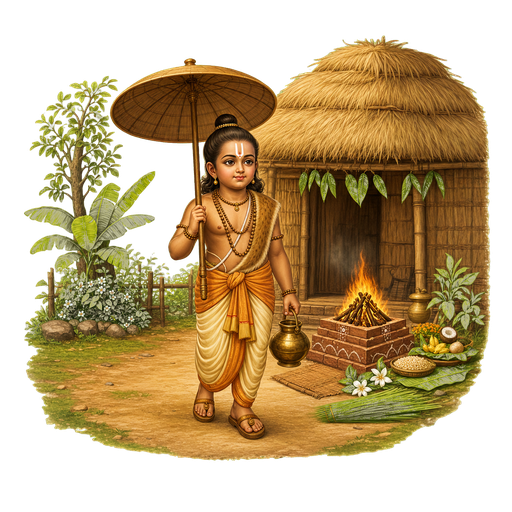
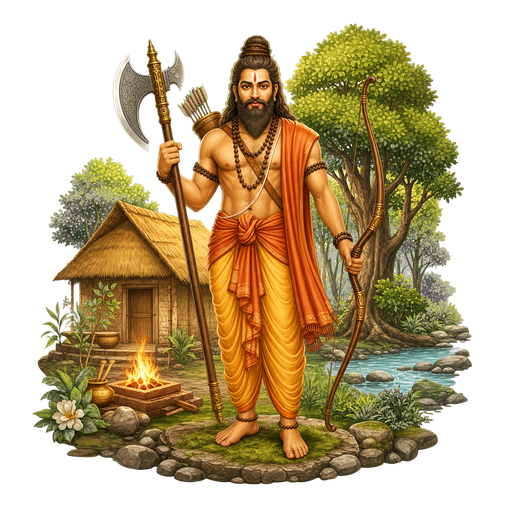
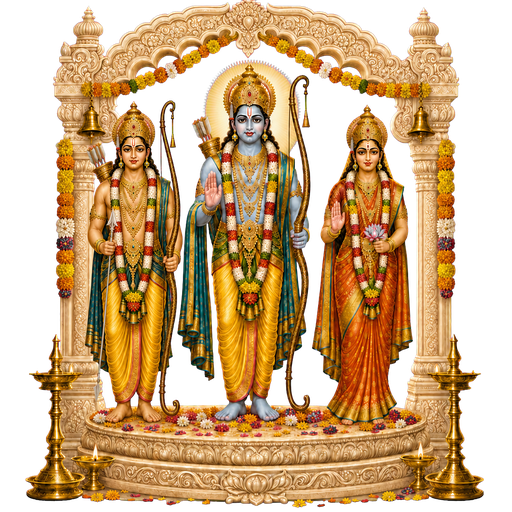
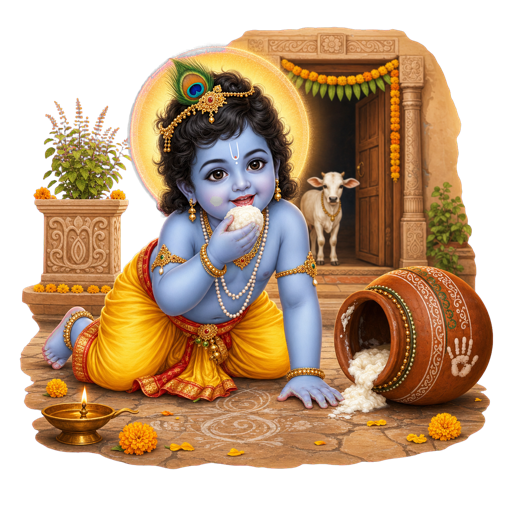
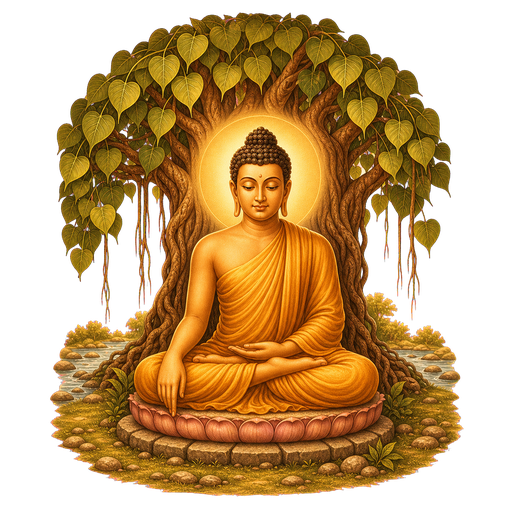
Kurma Jayanti, Narasimha Jayanti, Varaha Jayanti, Vamana Jayanti, Parshuram Jayanti, Ram Navami, Gokulashtami, and Buddha Purnima are parallel Jayantis within the dashavatar series — on different tithis, in remembrance of different avatars.
Good to know
- Chaitra Shukla Tritiya — this is the same tithi on which Chaitragaur begins; both fall on the same day.
- The two versions of the Matsya legend (the Manu-flood version and the Hayagriva-Veda-theft version) are both widely told — neither should be treated as the sole "original."
- Matsya is regarded as first in the dashavatar list, but the Bhagavata Purana's separate list places him tenth — both are true.
FAQ
- When is Matsya Jayanti in 2026?
- Saturday, 21 March 2026 (Chaitra Shukla Tritiya).
- What is the Matsya avatar / why did Vishnu take the form of a fish?
- To rescue Manu (or King Satyavrata) and the Vedas from a great flood, or to recover the Vedas stolen by the demon Hayagriva, depending on the version.
- Which avatar of Vishnu is Matsya?
- The first avatar in most dashavatar lists; the Bhagavata and Garuda Puranas' separate 24-avatar list places him tenth.
- How many versions of the Matsya avatar legend are there — what's the difference between the Manu-flood and Hayagriva stories?
- Mainly two — the Manu/Satyavrata flood legend (the fish's growth, the boat rescue) and the Hayagriva-Veda-theft legend (the demon's slaying, the recovery of the Vedas); both are widely told.
- What is the connection between Matsya Jayanti and Chaitragaur/Chaitra Navratri?
- All three fall in the same period — in 2026, Chaitragaur begins on the very same day (21 March), and Chaitra Navratri is also underway around then.
- Why does the Bhagavata Purana give a different order (tenth) for the Matsya avatar?
- The Bhagavata and Garuda Puranas place Matsya within their own separate, larger list of 24 avatars overall, where he comes tenth — the "dashavatar" is a different, popular subset list.
- What should be done on Matsya Jayanti?
- Fasting, bathing, worship of Vishnu/Matsya, recitation or listening to the Matsya Purana, and charity — by tradition, optional.