Mallikarjuna Jyotirlinga (Srisailam)
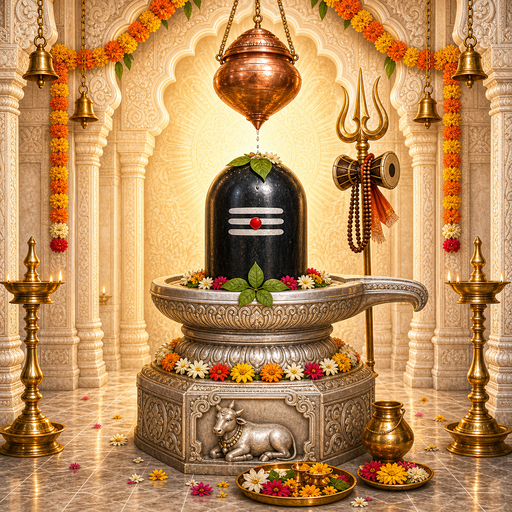
Mallikarjuna is the second of the twelve Jyotirlingas (after Somnath) — located at Srisailam, Nandyal district (formerly Kurnool district), Andhra Pradesh, on the banks of the Krishna river in the Nallamala hills. Here, Shiv is worshipped as Mallikarjuna and Parvati as Bhramaramba together — making it a site where a Jyotirlinga (Shaiva) and a Maha Shakti Peetha (Shakta) coexist. According to Andhra Pradesh Tourism's official information, this is only the second such place in India besides Varanasi. For many Shiv devotees from Maharashtra, it's an important stop on the twelve-Jyotirlinga pilgrimage.
This year's dates (2026)
- Sunday — Mahashivratri, Srisailam's biggest day of the year, the centre of the eleven-day Brahmotsavam15 Feb
- Thursday — Ugadi (the Telugu new year, the same tithi as Gudi Padwa); a five-day Ugadi Mahotsavam19 Mar
- Sunday — the start of Sharadiya Navratri; Bhramaramba Devi is said to receive special worship during Navratri, though which Navratri isn't clear11 Oct
- Kartik Purnima — a notable day within the month-long \24 Nov
A few local Shiv temples with similar names also exist in Maharashtra and Karnataka (for instance, at Ghotan-Shevgaon in Ahmednagar district, and Adi in Belgaum district) — these are separate, smaller local shrines, not this Mallikarjuna Jyotirlinga at Srisailam; don't confuse them.
Deity and significance
Mallikarjuna is Shiv, in the form of a Jyotirlinga — second in the traditional hymn order of the twelve Jyotirlingas, after Somnath and before Mahakaleshwar. Bhramaramba is Parvati, in the form of a Shakti Peetha — meaning "mother of the bhramara (bees)"; a popular legend tells of her slaying the demon Arunasura with a swarm of six-legged bees.
The common explanation for the name goes as follows — "Mallika" (jasmine, called "mallika" in Telugu) and "Arjuna" (a name for Shiv meaning "radiant/bright") — the name is said to have arisen because the linga was worshipped with jasmine flowers.
Bhramaramba is one of the eighteen Maha Shakti Peethas (named in the Ashtadasha Shakti Peetha Stotram attributed to Adi Shankaracharya). A broader tradition also holds that India has 51 or 52 Shakti Peethas — this classification difference is tradition-dependent, and no single figure is presented as settled here.
By tradition, Adi Shankaracharya is said to have composed the Shivananda Lahari (a hundred-verse Sanskrit hymn to Shiv) while staying at Srisailam — it is said to open with an invocation to Mallikarjuna and Bhramarambika. More on this connection is on the Adi Shankaracharya Jayanti page.
The Ashtadasha Shakti Peetha Stotram names Bhramaramba (Srisailam) alongside Kolhapur Mahalakshmi and Mahur (Ekvira/Renuka) — meaning this single ancient stotra brings together two Maharashtra Shakti Peethas and Srisailam's Bhramaramba.
History and legend
Satavahana-era inscriptional evidence traces the temple's existence back to the 2nd century CE. The Mallikarjuna sanctum (the temple's oldest part) is believed to date to the 7th century. Under Reddy rule in the 12th-13th centuries, the Veerashiromandapam and the steps down to Patala Ganga were built. Under Vijayanagara emperor Harihara I in the 14th-15th centuries, major additions and expansion took place. The temple is currently administered by the Government of Andhra Pradesh (via the Srisailam Devasthanam).
The original local legend comes from the Shiv Purana's "Koti Rudra Samhita" chapter — Kartikeya (Kumara) returns to Kailasa after circling the earth. Narada arrives and tells him of Ganesh's marriage and other news — this news disturbs Kartikeya's mind. Despite his parents' objections, Kartikeya leaves for Mount Krauncha. Girija (Parvati), deeply distressed by the separation, sends gods, sages, and ganas to bring him back — Kartikeya doesn't listen. Finally, Shiv and Parvati go themselves to meet him, but on sensing their arrival, Kartikeya moves even further away. It's at that very spot that Shiv and Parvati are said to have remained in a form of light (jyoti) — regarded as the Jyotirlinga's origin.
A completely separate legend, from local Chenchu tribal tradition, is also told — Shiv (Mallikarjuna) is said to have fallen in love with and married a Chenchu tribal maiden, Chenchu Lakshmi; in some tellings, Shiv came to the Srisailam forest to hunt and met the Chenchu maiden there. The local Chenchu community regards itself as descended from this couple, and is said to still have access to the sanctum today — particularly, many sources say, the privilege of performing abhishek-puja on the night of Mahashivratri, though this hasn't been confirmed by any official source and the current status is uncertain.
Architecture and layout
The temple complex covers about two hectares, with four gopurams; the enclosure walls run roughly 183 m by 152 m, standing about 8.5 m tall. The vimana over the main sanctum is described by an official Andhra Pradesh tourism source as pyramidal in style, Chalukyan, and nine-tiered; other sources describe the temple more generally as Dravidian in style, with examples of Vijayanagara-period architecture.
The temple features a Mukha Mandapa (Vijayanagara-period, with carved pillars), a Sahasra Linga (a thousand Shivlings), a Nataraja mirror hall, and five lingas said to have been installed by the Pandavas. The legends that Ram and Sita established the Sahasra Linga in the Treta Yuga, and that the Pandavas worshipped here during exile, are mythological/traditional claims, not archaeologically proven.
The temple faces east. Patala Ganga — about 1 km from the sanctum, reached by descending 852 steps — is a bathing spot on the Krishna river, traditionally visited before darshan.
Main festivals and pilgrimage
| Festival | Date (2026) | Connection |
|---|---|---|
| Mahashivratri + Brahmotsavam | 15 February | Srisailam's biggest festival of the year — an eleven-day Brahmotsavam (flag-hoisting, daily vahana sevas, the Lingodbhava Maha Rudrabhishekam at midnight on Shivratri itself, and the Rathotsavam-Teppotsavam the following day) |
| Ugadi Mahotsavam (the same tithi as Gudi Padwa) | 19 March | A five-day Ugadi Mahotsavam — special abhishekam, Panchanga Sravanam, Laksharchana, and an evening vahana seva |
| Karthika Mahotsavam (the whole month of Kartik) | Roughly late October to late November | A month of dawn rituals, lamp offerings, and special pujas |
| Kartik Purnima | 24 November | A notable, tithi-fixed day within the Karthika Mahotsavam period |
| Navratri (Bhramaramba) | From 11 October | Bhramaramba Devi is said to receive special worship during Navratri, though it isn't clear which Navratri |
The eleven-day Brahmotsavam is centred on the Mahashivratri tithi — in 2026, roughly 8-18 February. Confirm the exact dates with the Devasthanam each year.
Darshan and aarti timings
Sources genuinely disagree on darshan timings, even official ones. Andhra Pradesh Tourism (official, state) gives darshan hours of 5:30 AM-1 PM and 6-10 PM; Incredible India (official, central government) gives 6 AM-3:30 PM and 6-10 PM; other sources record yet different timings. One source notes that timings are extended during festivals (Mahashivratri, Karthika Masam, Shravan).
Confirm current timings with the Devasthanam or temple committee before your actual visit.
Rituals here
Descending the 852 steps from the sanctum to bathe in the Krishna river (at "Patala Ganga") before darshan is regarded as the traditional practice. During the Brahmotsavam, rituals include flag-hoisting, daily vahana sevas, the midnight Lingodbhava Maha Rudrabhishekam, and the Rathotsavam-Teppotsavam.
Mantra
Shivananda Lahari — by tradition, a hundred-verse Sanskrit hymn to Shiv composed by Adi Shankaracharya during his stay at Srisailam; its opening verse is said to invoke Mallikarjuna-Bhramarambika. The dvadash-Jyotirlinga stotra — the traditional text reads "Saurashtre Somanatham cha Shrishaile Mallikarjunam…," which is understood to name Mallikarjuna second in this order. The Ashtadasha Shakti Peetha Stotram — by tradition, names Bhramaramba of Srisailam within it. Full texts of these three stotras aren't given here — only their traditional meaning and identification.
Regional customs
Although this temple is outside Maharashtra, being one of the twelve Jyotirlingas draws many Shiv devotees from Maharashtra here as part of the "twelve-Jyotirlinga pilgrimage."
Ugadi (the Telugu new year) and Karthika Masam are prominent occasions on Andhra Pradesh's own cultural calendar — for Marathi readers, Ugadi falls on the very same tithi as their own Gudi Padwa, celebrated under a different name (the date matches because both traditions share the amanta panchang).
How to reach
By road, it's roughly 213-231 km from Hyderabad, about 180 km from Kurnool, and about 264 km from Vijayawada — APSRTC buses run from Markapur, Atmakur, and Dornala. Since the route passes through the Nallamala Tiger Reserve, road travel is restricted between 9 PM and 6 AM for forest safety — a distinctive feature of this pilgrimage, so plan your travel timing in advance.
The nearest railway station is Markapur Road (roughly 83-85 km) — comparatively far, with limited direct rail connectivity; Kurnool City railway station is also considered an option, though sources differ on this. The nearest airport options are Hyderabad (roughly 217-231 km) or Kurnool (roughly 180 km). There's also a traditional walking route through the Nallamala forest, reportedly used specifically during Mahashivratri and Ugadi.
Nearby places
- Patala Ganga (about 1 km) — the bathing ghat on the Krishna river, reached via 852 steps.
- Sakshi Ganapati (about 3 km) — a Ganesh temple believed to keep record of every pilgrim's visit.
- Paladhara Panchadhara (about 4 km) — natural springs/waterfalls.
- Shikhareshwaram — Srisailam's highest peak, home to the Shikhareshwar Swami temple.
- Srisailam Dam — India's second-largest hydroelectric station, on the Krishna river.
- Akkamahadevi Caves and the Chenchu Lakshmi Tribal Museum.
- Nagarjunsagar-Srisailam Tiger Reserve — India's largest tiger reserve; the entire temple area falls within it.
Traveller tips
- Road travel is restricted between 9 PM and 6 AM for forest safety — plan your travel timing in advance.
- The 852 steps down to Patala Ganga can be strenuous for elderly or differently-abled devotees — check for alternative transport options beforehand.
- Expect very heavy crowds during the eleven-day Mahashivratri Brahmotsavam — plan darshan queues and accommodation ahead of time.
- Rail connectivity is limited (the nearest station is about 83 km away) — bus or private vehicle is the main option.
- Timings change during festivals — confirm darshan timings with the Devasthanam before setting out.
Good to know
- This is one of only two places in India where a Jyotirlinga and a Maha Shakti Peetha coexist (the other being Varanasi).
- The district name has changed — formerly Kurnool district, Nandyal district since April 2022; some older sources still say "Kurnool."
- The mythological Kartikeya legend and the local Chenchu Lakshmi tradition are two separate accounts — understand them distinctly, without conflating them.
FAQ
- Where is the Mallikarjuna Jyotirlinga?
- At Srisailam, Nandyal district (formerly Kurnool district), Andhra Pradesh — on the banks of the Krishna river, in the Nallamala hills.
- Which state and district is the Srisailam temple in?
- Andhra Pradesh; currently Nandyal district (part of Kurnool district before the April 2022 reorganisation).
- Which of the twelve Jyotirlingas is Mallikarjuna?
- Second in the traditional hymn order — after Somnath.
- Where in India does a Jyotirlinga coexist with a Shakti Peetha at the same site?
- According to Andhra Pradesh Tourism, there are only two such places in India — Srisailam (Mallikarjuna-Bhramaramba) and Varanasi (Kashi Vishwanath-Vishalakshi).
- Who is Bhramaramba Devi, and what does the name mean?
- A form of Parvati, the presiding goddess of Srisailam; one of the eighteen Maha Shakti Peethas. The name means "mother of the bhramara (bees)."
- What does the name "Mallikarjuna" mean?
- "Mallika" (jasmine) and "Arjuna" (a name for Shiv meaning radiant/bright) — the name is believed to have arisen because the linga was worshipped with jasmine flowers.
- When is the Srisailam Mahashivratri Brahmotsavam?
- Centred on Magh Krishna Trayodashi (15 February in 2026), an eleven-day Brahmotsavam; confirm the exact dates with the Devasthanam each year.
- How do I reach Srisailam from Hyderabad or Kurnool?
- Roughly 213-231 km from Hyderabad, about 180 km from Kurnool; bus or private vehicle by road is the main option; road travel is restricted 9 PM-6 AM for forest safety.
- What is Adi Shankaracharya's connection to Srisailam?
- By tradition, he composed the Shivananda Lahari, a hymn to Shiv, during his stay here — it is said to open with an invocation to Mallikarjuna-Bhramarambika.
- What is the Chenchu tribe's connection to the Mallikarjuna temple?
- Local Chenchu tradition holds that Shiv (Mallikarjuna) married a Chenchu maiden, Chenchu Lakshmi; the Chenchu community regards itself as her descendants and is said to have special access to the sanctum — though this hasn't been officially confirmed.
Related Info
 Maha Shivratri15 Feb
 Gudi Padwa19 Mar
- Tripurari Pournima24 Nov
 Navratri11 Oct
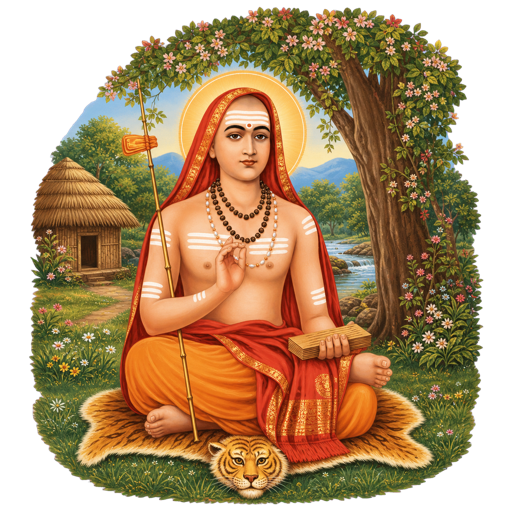 Adi Shankaracharya Jayanti21 Apr
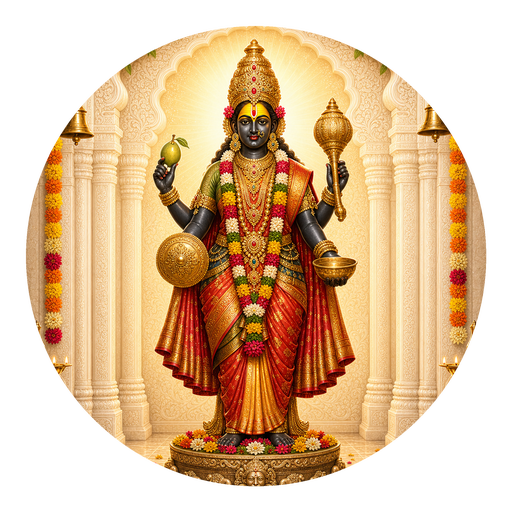 Kolhapur Mahalakshmi (Ambabai)11 Oct
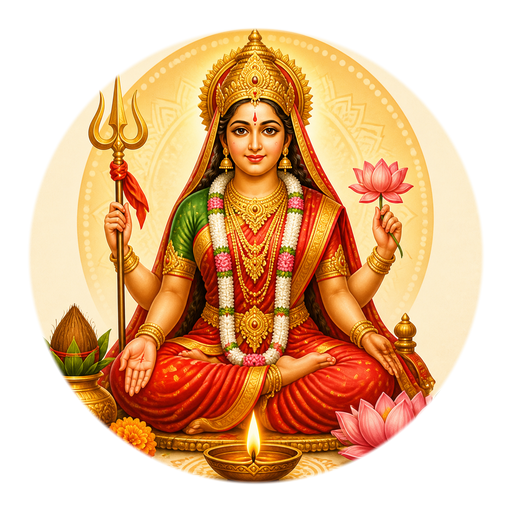 Mahur — Renuka Mata11 Oct
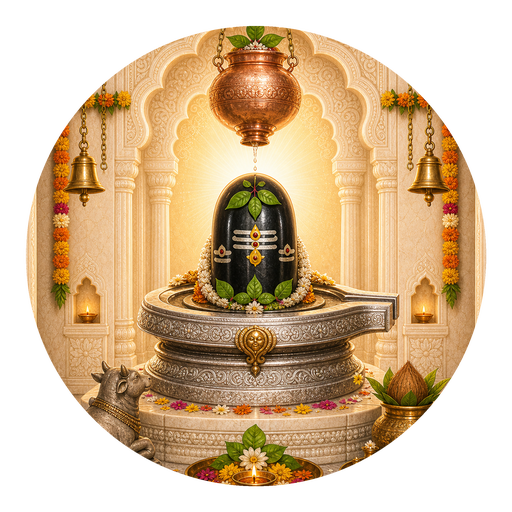 Trimbakeshwar14 Jan
 Bhimashankar15 Feb
 Grishneshwar15 Feb
 Aundha Nagnath15 Feb
 Parli Vaijnath13 Feb
 Deoghar Baidyanath Dham15 Feb
- Dwarka Nageshwar15 Feb
- Kashi Vishwanath (Varanasi, Uttar Pradesh)15 Feb
- Kedarnath15 Feb
- Mahakaleshwar (Ujjain, Madhya Pradesh)15 Feb
- Omkareshwar (Madhya Pradesh)25 Jan
- Rameshwaram (Tamil Nadu)15 Feb
- Somnath15 Feb